



.png)








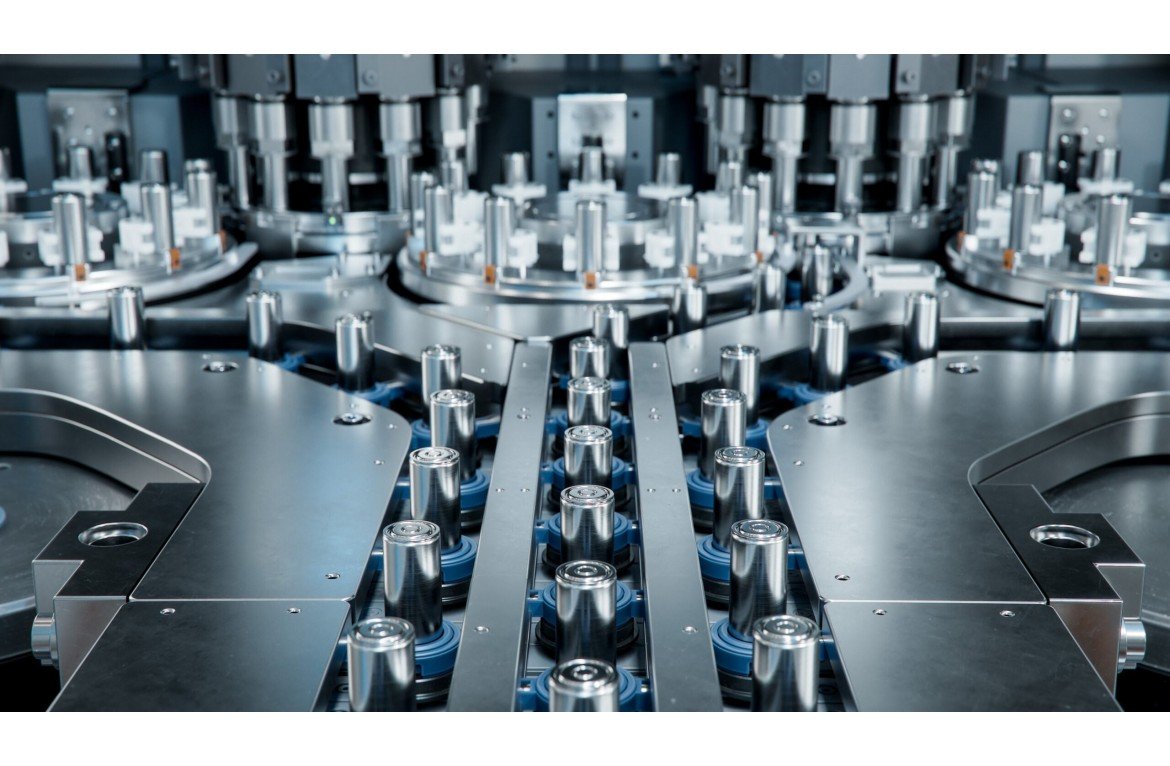
Battery Manufacturing Measurement: Dry Rooms, Electrode Drying and Plant Monitoring
Measurement Instruments for Battery Manufacturing
Battery manufacturing involves several different measurement tasks: checking dry-room conditions, monitoring drying processes, recording cell temperature and measuring the utilities serving production equipment.
Selecting the correct instrument starts with identifying what needs to be measured, where the measurement is taken and what process decision depends on the result.
Seacom supports humidity, dew point, temperature, pressure and flow measurement, together with continuous monitoring systems. For battery manufacturing, the following examples provide practical starting points for selecting instruments from Vaisala, Anritsu and Badger Meter.
1. Dry-Room Dew Point Monitoring
Moisture-sensitive battery materials require carefully controlled handling environments. A measurement at the dehumidifier outlet tells you about the supply air, while measurements distributed inside the dry room help establish the conditions where materials are actually handled and processed.
Product to Consider: Vaisala DMP1
The Vaisala DMP1 Dew Point and Temperature Probe is specifically designed for low-humidity environments including battery-manufacturing dry rooms.
Its fast response and compact probe construction make it suitable for distributing several measurement points across a production area rather than relying on one room sensor.
Example: A battery manufacturer wants to monitor dew point near material-handling and assembly stations. DMP1 probes can be considered as part of a room-monitoring arrangement, with positions established through an assessment of airflow, room layout and process requirements.
The required dew point should come from the battery chemistry and manufacturing specification. One dew-point limit should not automatically be assumed suitable for every battery chemistry or manufacturing process.
2. Dehumidifier and Dry-Air System Measurement
Dry-room monitoring and dehumidifier measurement are related, but the sensor locations and operating conditions can be very different.
A probe installed in a duct, dehumidifier or dry-air line must be selected according to the actual temperature, pressure, dew point and mechanical installation at that particular location.
Products to Consider: Vaisala DMP7 and DMP8
The Vaisala DMP7 is useful where installation space is limited.
Its compact sensing head makes it suitable for equipment, dry-air systems and restricted installations where a larger probe arrangement may be difficult to accommodate.
The Vaisala DMP8 is designed for pressurised pipelines and provides adjustable insertion depth with an optional ball-valve installation arrangement.
Example: A dehumidifier manufacturer needs a continuous dew-point signal for its control system. DMP7 can be reviewed where installation space is limited, while DMP8 can be considered where a pressurised pipeline and adjustable probe insertion are required.
Before selecting the configuration, confirm:
- Minimum and maximum dew point
- Gas temperature
- Process pressure
- Required response time
- Pipe or duct dimensions
- Required insertion depth
- Process connection
- Analog or digital output requirement
3. Moisture Measurement During Electrode Drying
Electrode drying presents different measurement conditions from a dry room. The measurement point may involve hot process gas, rapidly changing moisture levels and exposure to solvents or other process chemicals.
The dew-point probe must therefore be selected according to both the required moisture range and the actual process temperature and atmosphere.
Vaisala DMP5 for Elevated-Temperature Drying
The Vaisala DMP5 Dew Point Probe is designed for direct measurement in industrial drying applications at process temperatures up to +180 °C.
Its long stainless-steel probe allows the sensing point to reach into hot ducts or drying equipment while the probe body remains outside the hottest part of the process.
Vaisala DMP6 for Very-High-Temperature Drying
For very-hot drying processes, the Vaisala DMP6 Dew Point Probe supports direct process measurement up to +350 °C using a dedicated passive cooling arrangement.
Example: An electrode-drying line requires moisture measurement at a selected dryer stage. DMP5 or DMP6 can be assessed against the actual gas temperature, dew point, installation position and chemical exposure.
These probes measure moisture conditions in the process gas. They do not directly measure residual moisture inside the electrode material.
Any relationship between the measured process-gas dew point and completion of the electrode-drying process must therefore be established through the manufacturer's validated process method.
Where NMP or other solvents are present, provide the solvent type, expected concentration and operating conditions so that the application can be reviewed specifically.
4. Ultra-Dry Gas and Inert-Atmosphere Monitoring
Glove boxes, dry enclosures and selected process-gas systems may require lower moisture levels than the surrounding production environment.
The correct instrument depends on the required dew-point range, process pressure and gas composition.
Product to Consider: Vaisala DMT153
The Vaisala DMT153 Dew Point Transmitter is designed for ultra-low dew-point applications including battery manufacturing, semiconductor production and pure-gas systems.
Its calibrated dew/frost-point range extends from approximately −80 to −20 °C Td/f.
Example: An equipment builder needs to monitor dry nitrogen supplied to a moisture-sensitive enclosure. DMT153 can be considered where the target dew point, pressure and gas composition fall within the instrument specifications.
A dew-point measurement indicates moisture conditions at the sensor. It does not measure oxygen concentration and should not be treated as a complete measurement of every aspect of an inert atmosphere.
5. Recording Battery-Cell Temperature During Activation
During cell activation, formation and associated charging operations, engineers may need to compare temperatures at several locations over time.
A multi-channel temperature logger provides a different type of information from a single handheld spot measurement because several cells or measurement locations can be recorded on the same time base.
Anritsu AM-9000 Series Multi-Channel Temperature Logger
The Anritsu AM-9000 Series provides six- or twelve-channel thermocouple temperature logging for applications where several temperatures need to be viewed and recorded together.
Depending on the selected model, the logger can support E, K, J, T or R thermocouples and offers internal data storage for later analysis.
For battery-cell surface measurement, suitable thin or flat-leaf Anritsu temperature probes can be selected according to the required temperature range, contact method and electrical requirements.
Example: An engineer wants to compare temperature behaviour across several cells during an evaluation or activation cycle. Appropriately installed surface probes with a compatible AM-9000 configuration allow all channels to be recorded together.
Before selecting the system, confirm:
- Number of temperature channels
- Thermocouple type
- Expected temperature range
- Probe attachment method
- Measurement interval
- Test duration
- Electrical-isolation requirements
A surface temperature measurement should not automatically be interpreted as the internal temperature of the battery cell.
6. Barometric and Differential Pressure Measurement
Pressure requirements in battery manufacturing should clearly identify the reference.
These are different measurements:
- Ambient absolute or barometric pressure
- Pressure difference between two rooms
- Duct differential pressure
- Process pressure
- Vacuum
Ambient Pressure: Vaisala Indigo520 with Barometer Module
The Vaisala Indigo520 can be supplied with an optional barometric-pressure module for applications where ambient atmospheric pressure needs to be measured together with compatible humidity, temperature or dew-point probes.
Example: A laboratory or production-monitoring specification requires ambient pressure to be recorded alongside humidity or dew point. An appropriately configured Indigo520 can be considered for this requirement.
The barometric-pressure module should not be used as a substitute for a room differential-pressure transmitter or a pressure instrument selected for deep-vacuum applications.
Room Differential Pressure: Vaisala PDT101 / PDT102
Where the requirement is to monitor the pressure relationship between a controlled production area and an adjoining space, the Vaisala PDT101 and PDT102 Differential Pressure Transmitters can be considered.
The required pressure range should be selected according to the actual room-pressure specification rather than simply choosing the widest available range.
View Vaisala Indigo510 / Indigo520
7. Cooling-Water Flow Measurement
Factory utilities are another important part of the battery-manufacturing measurement requirement.
A cooling-water circuit serving production equipment should be assessed separately from electrolyte, slurry, solvent or other process-fluid systems.
Product to Consider: Badger Meter ModMAG M2000
The Badger Meter ModMAG M2000 Electromagnetic Flow Meter can be considered for compatible conductive cooling and utility water.
Example: A facilities team needs a flow signal from a cooling-water branch for plant monitoring. The M2000 can be reviewed against the actual flow range, pipe diameter, pipework and required communication interface.
The M2000 provides communication options including Modbus and BACnet depending on the selected configuration, making it suitable for integration with plant or building monitoring systems.
Before selecting a magnetic flow meter, confirm:
- Minimum, normal and maximum flow
- Pipe diameter
- Liquid conductivity
- Water chemistry
- Wetted-material compatibility
- Full-pipe conditions
- Available straight pipe
- Grounding requirements
- Required communication protocol
Badger specifies a minimum conductivity of 5 µS/cm, or 20 µS/cm for demineralised water, for the M2000.
Do not automatically assume that the meter is suitable for ultrapure water, battery electrolyte, electrode slurry, dielectric coolant or every water/glycol mixture without checking the actual fluid properties and wetted-material compatibility.
View Badger Meter ModMAG M2000
Browse other flow measurement options
8. Continuous Monitoring, Records and Alarms
A local display may be sufficient for an occasional check. Where several locations require continuous records, alarms, trends and reports, the project needs a monitoring-system design as well as suitable measurement devices.
Vaisala viewLinc Continuous Monitoring System
The Vaisala viewLinc Continuous Monitoring System can provide central environmental monitoring across multiple production and storage areas.
Depending on the connected instruments and system design, monitored parameters can include:
- Temperature
- Relative humidity
- Dew point
- Differential pressure
- Other compatible environmental measurements
Example: A battery facility wants central records and alarms for dry-room conditions and selected storage or production areas. The design should identify the required measurement locations, compatible devices, communication paths, alarm recipients and reporting requirements.
Continuous monitoring and recording should be distinguished clearly from equipment process control and machine-protection functions.
View Vaisala viewLinc Continuous Monitoring System
Which Instrument Should You Consider?
| Battery Manufacturing Requirement | Instrument to Consider |
|---|---|
| Distributed dry-room dew point monitoring | Vaisala DMP1 |
| Compact dehumidifier or equipment dew point measurement | Vaisala DMP7 |
| Pressurised dry-air or gas pipeline | Vaisala DMP8 |
| Electrode drying up to +180 °C | Vaisala DMP5 |
| Very-high-temperature drying up to +350 °C | Vaisala DMP6 |
| Ultra-dry nitrogen or process gas | Vaisala DMT153 |
| Multi-point battery-cell temperature logging | Anritsu AM-9000 Series |
| Ambient barometric pressure with other environmental measurements | Vaisala Indigo520 |
| Room differential pressure | Vaisala PDT101 / PDT102 |
| Conductive cooling-water flow | Badger Meter ModMAG M2000 |
| Central environmental monitoring, alarms and records | Vaisala viewLinc |
Measurement Support Beyond These Examples
Battery manufacturing involves many measurement requirements beyond the examples above.
Seacom supports wider industrial humidity, dew point, temperature, pressure and flow measurement together with continuous monitoring systems.
Your enquiry does not have to match one of the examples exactly. Send us the process details, equipment specification or existing instrument model for review.
Useful information includes:
- What needs to be measured?
- Where will the measurement be made?
- Required range and accuracy
- Required response time
- Gas, liquid or chemicals present
- Operating temperature
- Operating pressure
- Pipe, duct or chamber dimensions
- Required electrical output or communication protocol
- Whether local indication is required
- Whether data logging, alarms or reports are required
- Existing instrument model, if replacing equipment
- Quantity
- Project schedule
A process drawing, equipment drawing or photograph can often help explain the measurement point and available installation space.
Battery Manufacturing Measurement Support in Malaysia
Seacom Process Instruments supplies and supports measurement instruments for battery manufacturing, dry rooms, electrode drying, production equipment, plant utilities and environmental monitoring in Malaysia.
Our team can help review dew point, humidity, temperature, pressure and flow applications and recommend a suitable instrument configuration based on the actual process conditions.
Ask Seacom about battery manufacturing measurement
Dry-room & dew point instruments Battery temperature measurement Pressure instruments Flow instruments Continuous monitoring systems
All comments