


.png)








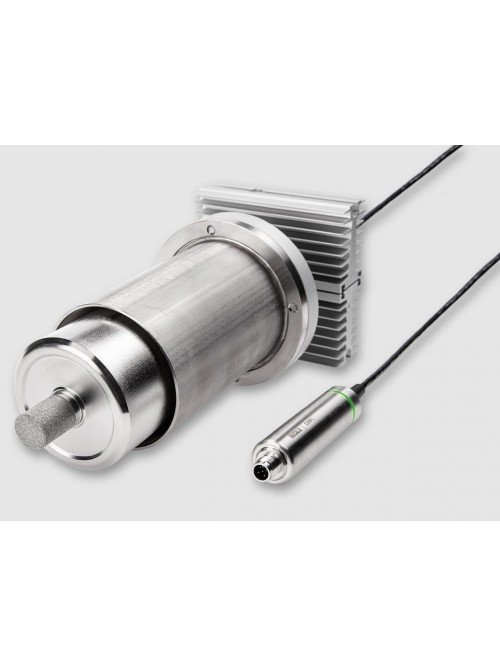
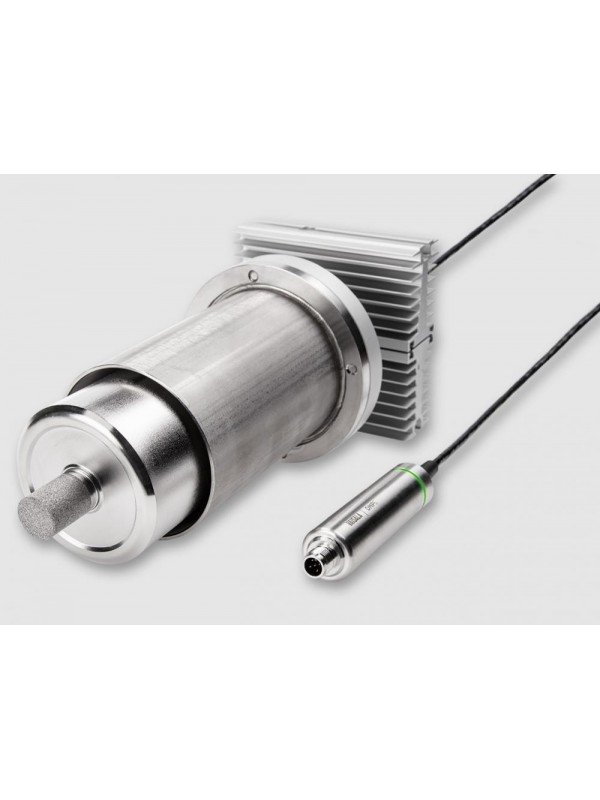
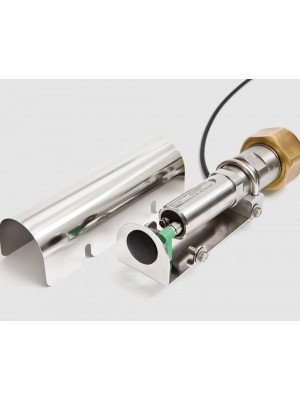
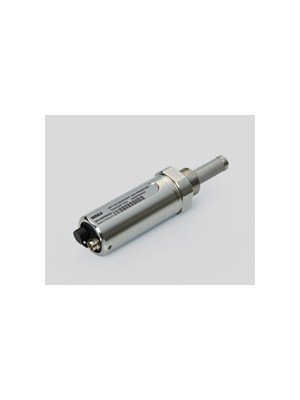
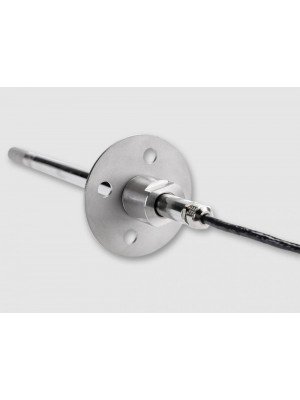
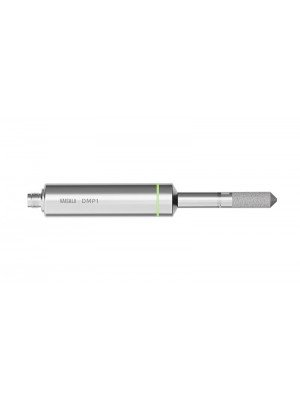
The Vaisala DRYCAP® Dew Point Probe DMP6 measures humidity directly inside very hot industrial processes using a robust probe and passive cooling set.
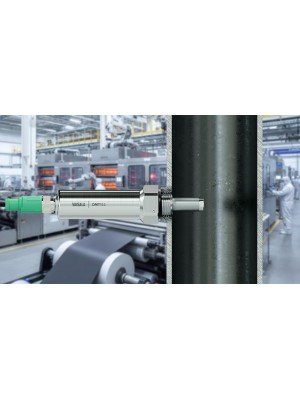
The Vaisala DMP6 is designed for direct in-line humidity measurement in industrial processes operating at temperatures up to +350 °C. It combines a high-temperature probe with a passive cooling set that conducts heat away from the sensor and keeps the measurement element within its permitted operating range.
Because the cooling system has no moving parts and requires no electrical power, cooling water or compressed air, the DMP6 provides a straightforward way to measure inside hot dryers and ovens without a separate sampling system or heated sample line.
| Primary application | Direct measurement in very hot industrial processes |
|---|---|
| Process temperature | +100 to +350 °C for direct high-temperature measurement |
| Dew point range | −25 to +100 °C Td/f |
| Dew point accuracy | ±2 °C Td/f |
| Digital output | Modbus RTU over RS-485 |
| Sensor | Vaisala DRYCAP® 180S |
| Probe-body protection | IP66 |
| Cooling method | Passive conduction cooling with configurable cooling fins |
| Property | Specification |
|---|---|
| Dew point measurement range | −25 to +100 °C Td/f |
| Dew point accuracy | ±2 °C Td/f |
| Dry-to-wet response, 63% [90%] | 5 seconds [10 seconds] |
| Wet-to-dry response, 63% [90%] | 45 seconds [5 minutes] |
| Typical mixing-ratio range | 0 to 1000 g/kg |
| Probe-head process range | +100 to +350 °C for direct measurement with the cooling set |
| Probe-body operating range | −40 to +80 °C |
| Operating voltage | 15–30 V DC |
| Probe material | AISI 316L stainless steel |
| Standard probe cable | 2 m |
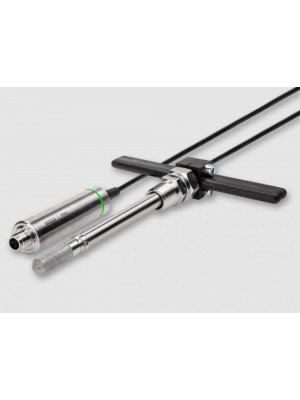
The DMP6 sensing head is installed inside the cooling set. Heat is conducted away from the probe through the cooling body and removable fins, reducing the sensor temperature without external cooling utilities. The number and arrangement of cooling fins are selected according to the actual process temperature.
Important: the sensor temperature must remain below +180 °C, including during abnormal process conditions. After installation and stabilisation, verify the sensor temperature and saturation-ratio diagnostics using Vaisala Insight software, Indigo80 or Modbus.
High gas velocity changes the cooling behaviour and can reduce performance or damage the assembly. Confirm the process temperature, airflow and mounting arrangement before finalising the installation.
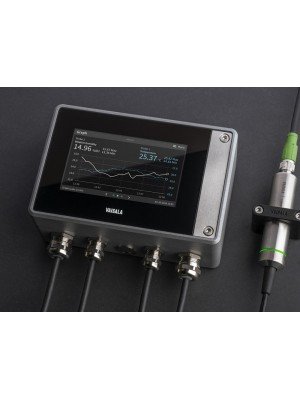
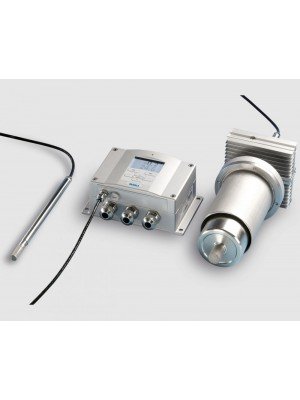
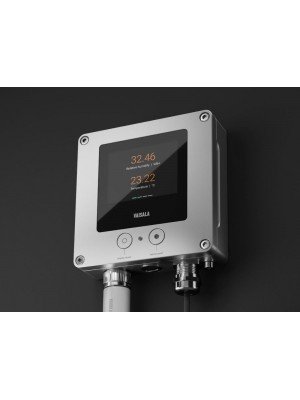
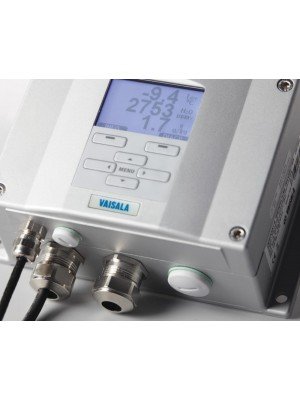
The DMP6 can connect directly to an automation or monitoring system using Modbus RTU. Where a permanent display, analogue output, relay or Ethernet connection is required, pair it with a compatible Vaisala Indigo transmitter.
Connect the DMP6 to the Vaisala Indigo80 handheld indicator for portable display, data logging, diagnostics, probe configuration and field calibration. Indigo80 can also read temperature from a second compatible probe when an external temperature-compensation value is required.
Portable-use note: Indigo80 makes the display and service functions portable; the DMP6 probe and cooling set remain mechanically installed for high-temperature process measurement. DMP80 is a separate handheld probe intended for portable dew point spot checks.
The DMP6 also works with Vaisala Insight PC software for configuration, diagnostics, temporary online monitoring and calibration support.
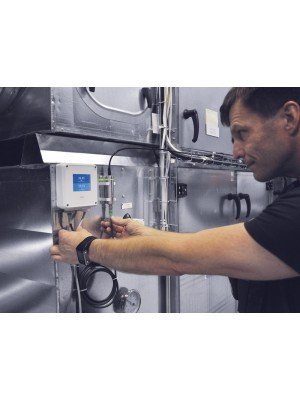
Before ordering, confirm the normal and maximum process temperatures, expected dew point, gas velocity, duct or oven-wall construction, insulation thickness, available external clearance and required output. These details determine the cooling-fin arrangement and whether the DMP6 is suitable for the measurement point.
The probe should be installed where the gas represents the actual process condition. Avoid stagnant zones, direct contact with product, locations exposed to mechanical impact and positions where condensed water can collect around the cooling set.
Choose the DMP probe according to the installation environment, process temperature, pressure and required dew point range.
| Model | Best suited to | Dew point range | Temperature or pressure limit | Installation |
|---|---|---|---|---|
| DMP1 | Dry rooms, battery production and semiconductor manufacturing | −70 to +80 °C Td/f | Probe operating temperature −40 to +80 °C | Compact fixed probe for distributed room monitoring |
| DMP5 | Hot industrial dryers, ovens and process ducts | −40 to +100 °C Td/f | Process temperature up to +180 °C | Long direct-insertion probe with adjustable mounting depth |
| DMP6 | Very-high-temperature dryers, ovens and industrial processes | −25 to +100 °C Td/f | Direct process measurement from +100 to +350 °C | Direct-insertion probe with a dedicated passive cooling set |
| DMP7 | Tight spaces, compact equipment, dry gas and compressed air | −70 to +80 °C Td/f | Process pressure up to 10 bar | Short 41 mm sensing head with pressure-tight fitting |
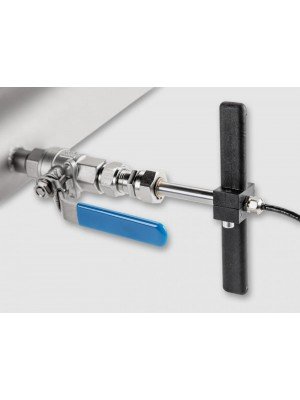
| DMP8 | Pressurised compressed-air and industrial-gas pipelines | −70 to +80 °C Td/f | Process pressure up to 40 bar absolute | Adjustable insertion depth with optional ball-valve installation |
Quick selection: choose DMP1 for distributed dry-room monitoring, DMP5 for processes up to +180 °C, DMP6 for very hot processes up to +350 °C, DMP7 when installation space is limited, and DMP8 for pressurised pipelines up to 40 bar.
All five probes support Modbus RTU, compatible Vaisala Indigo transmitters, the Indigo80 handheld indicator and Vaisala Insight software. The final selection should also consider process gas, flow velocity, mounting access, required outputs and calibration arrangements.





Seacom Process Instruments supplies and supports the Vaisala DMP6 High-Temperature Dew Point Probe in Malaysia for industrial drying, ovens, food processing, building materials and other very-hot process applications.
Our team can assist with application review, cooling-set configuration, installation location, Indigo transmitter pairing, Indigo80 servicing arrangements, automation integration, commissioning and calibration planning.
Contact Seacom with your process temperature range, expected dew point, gas velocity, duct or oven construction, insulation thickness, available mounting clearance and required output so we can assess a suitable DMP6 arrangement.
Download |

.
The Vaisala Indigo500 Series provides flagship industrial measurement integration: choose Indigo510 for a simplified single-probe system or Indigo520 for full dual-probe capability.
The Vaisala Indigo200 Series is the standard transmitter platform for one interchangeable Indigo-compatible smart probe, providing local display and practical automation-system connectivity.
.
The Vaisala DMT153 provides traceable low-dew-point measurement for ultra-dry industrial processes. It is the current replacement for the DMT152, with modern analog, Modbus and Vaisala Indigo connectivity.
The Vaisala Indigo200 Series is the standard transmitter platform for one interchangeable Indigo-compatible smart probe, providing local display and practical automation-system connectivity.
The Vaisala DRYCAP® Dew Point and Temperature Probe DMP8 provides reliable low-humidity measurement in pressurised pipelines with adjustable installation depth.
The Vaisala DPT145 provides online dew-point, pressure and temperature measurement for SF6-insulated electrical equipment. The model is being discontinued and should not be specified for new projects.
The Vaisala Indigo500 Series provides flagship industrial measurement integration: choose Indigo510 for a simplified single-probe system or Indigo520 for full dual-probe capability.
The Vaisala DMT345 and DMT346 provided direct dew-point measurement in hot industrial drying processes. Both models are discontinued and replaced by Vaisala DMP5 or DMP6 smart probes with an Indigo transmitter.
The Vaisala DPT146 combines dew-point and process-pressure measurement in one compact transmitter for compressed-air systems. This model is discontinued and should not be selected for new projects.
The Vaisala DRYCAP® Dew Point and Temperature Probe DMP5 measures humidity directly in hot industrial processes with a long stainless-steel probe and adjustable installation depth.
The Vaisala DMP1 Dew Point and Temperature Probe provides fast, dependable low-humidity measurement for dry rooms and moisture-sensitive manufacturing areas.
The Vaisala Indigo300 is a rugged industrial transmitter for one Vaisala Indigo-compatible smart probe, providing local measurement display and up to three configurable analog outputs.
Its corrosion-resistant IP66 metal enclosure, flexible probe mounting and interchangeable probe design make Indigo300 suitable for humidity, temperature, dew point, CO2, moisture in oil and other demanding industrial measurements.
The Vaisala DMT340 Series provided configurable dew-point and temperature measurement for industrial low-humidity applications. The series is discontinued and replaced by Vaisala Indigo500 transmitters with DMP7 or DMP8 smart probes.
The Vaisala DRYCAP® Dew Point and Temperature Probe DMP7 is designed for accurate low-humidity measurement where installation space is limited.
The Vaisala DRYCAP® Dew Point Probe DMP6 measures humidity directly inside very hot industrial processes using a robust probe and passive cooling set.
 DMP6 catalogue
(1.02M)
DMP6 catalogue
(1.02M)