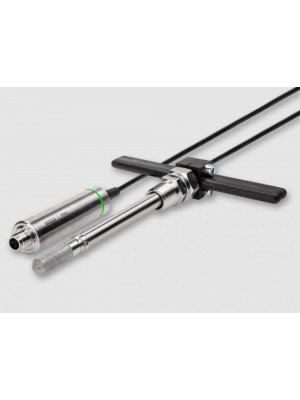
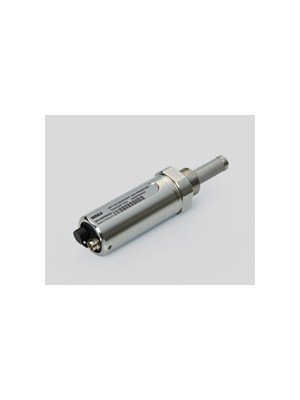
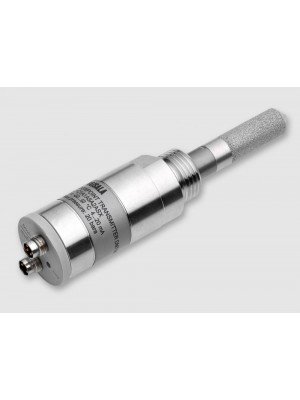
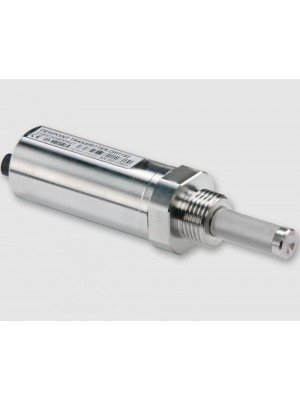
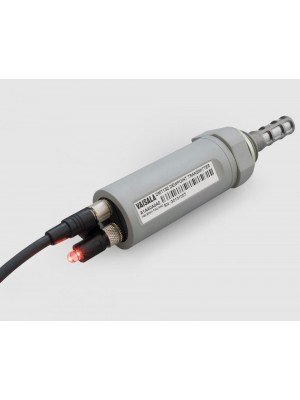
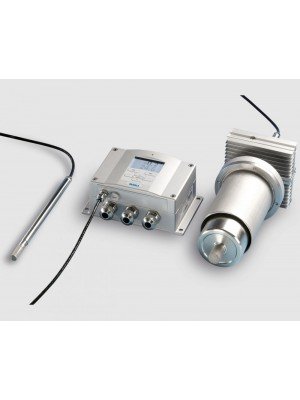
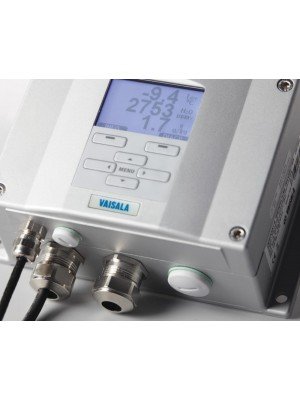
Dew Point Meters for Compressed Air and Industrial Gases
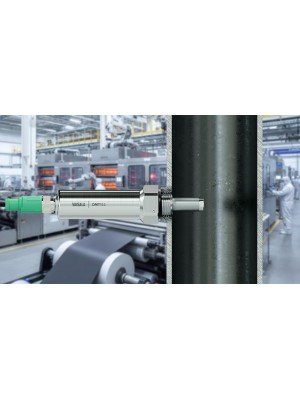
Seacom supplies portable dew point meters, fixed transmitters and probes for compressed air, air dryers, industrial gases and low-humidity processes. The range supports both occasional spot checks and continuous measurement, with instruments for dry rooms, pressurised pipelines and industrial drying.
Choosing a dew point meter for compressed air starts with the expected dew-point range, operating pressure and measurement purpose. A portable instrument suits checks at multiple locations, while a fixed transmitter provides continuous readings for monitoring and control. Use the application table below to identify suitable products, then confirm the probe, installation accessories and output requirements.
Choose a Dew Point Instrument by Application
| Application | Recommended product | Why it fits |
|---|
| Refrigerant dryers |
Vaisala DMT132 |
Designed for monitoring the typical dew-point range of refrigerant dryers. |
| Compact OEM equipment and small dryers |
Vaisala DMT143 / DMT143L |
Compact installation with analogue and digital integration options. |
| Very dry compressed air and industrial gas |
Vaisala DMT153 |
For demanding low-dew-point measurement down to ultra-dry conditions. |
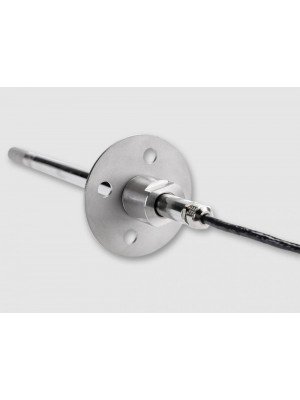
| Dry rooms and controlled environments |
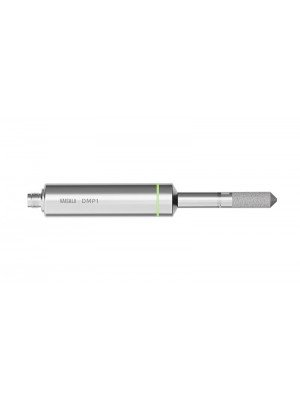
Vaisala DMP1 |
Compact wall-mounted probe for dry rooms and low-humidity spaces. |
| Hot processes up to +180°C |
Vaisala DMP5 |
Long probe for ovens, dryers and other high-temperature processes. |
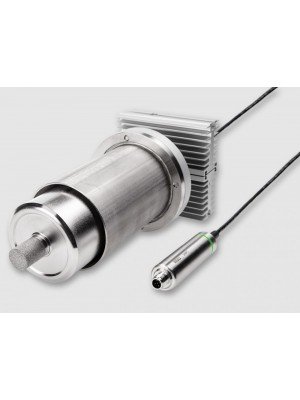
| Very hot processes up to +350°C |
Vaisala DMP6 |
Passive probe cooling allows measurement directly in very hot processes. |
| Tight spaces and sampling systems |
Vaisala DMP7 |
Short probe with a compact sensing head for restricted installations. |
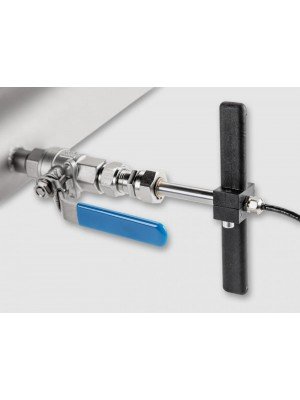
| Pressurised pipelines |
Vaisala DMP8 |
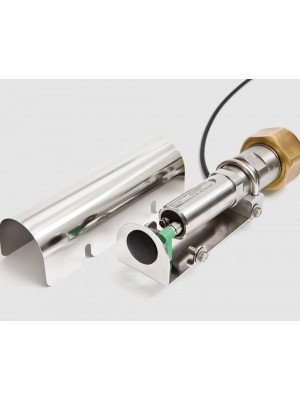
Adjustable insertion depth and process fittings for pipeline installation. |
| Portable checks and spot measurement |
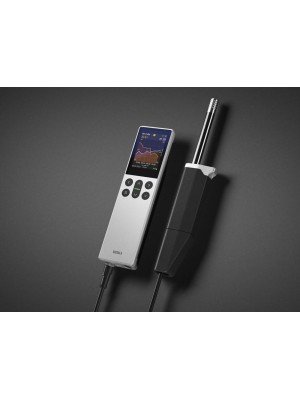
Vaisala Indigo80 with DMP80 |
Portable measurement, field checks, data logging and probe diagnostics. |
Compare Current Vaisala Dew Point Products
| Product | Main strength | Typical installation |
|---|
| DMT132 |
Purpose-built dryer monitoring |
Refrigerant dryer outlet |
| DMT143 / DMT143L |
Small size and flexible OEM integration |
Compact equipment or sampling cell |
| DMT153 |
Ultra-dry measurement with high-pressure capability |
Pipeline or sampling system |
| DMP1 |
Dry-room installation |
Wall or controlled space |
| DMP5 |
High-temperature measurement |
Oven, dryer or chamber |
| DMP6 |
Measurement in very hot processes |
Industrial oven or furnace process |
| DMP7 |
Compact probe for confined locations |
Sampling cell or tight process connection |
| DMP8 |
Adjustable pipeline insertion |
Pressurised air or gas line |
Indigo Transmitters for DMP Dew Point Probes
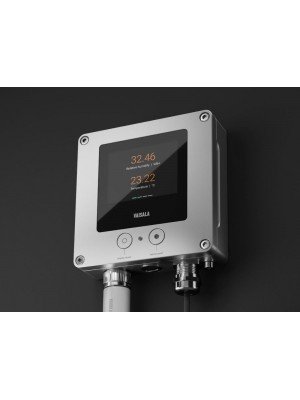
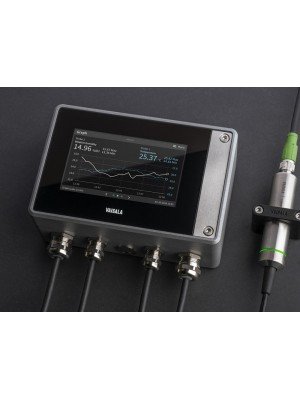
Vaisala DMP probes can operate as standalone Modbus RTU devices or connect to an Indigo transmitter when a display, analogue output, relay, Ethernet connection or local configuration interface is required.
Discontinued Vaisala Dew Point Instruments
Some established Vaisala dew point models have been discontinued. The best replacement depends on the original probe version, process connection, pressure, output and measured gas. Use the following table as a guide rather than a direct drop-in guarantee.
| Discontinued model | Current direction | Important note |
|---|
| DMT152 |
DMT153 |
Confirm pressure, output and mechanical connection before replacement. |
| DMT340 series |
Indigo500 transmitter with DMP7 or DMP8 |
The suitable DMP probe depends on the former DMT340 probe arrangement. |
| DMT345 / DMT346 |
DMP5 / DMP6 with an Indigo transmitter |
DMP5 follows the DMT345 application range; DMP6 follows the DMT346 high-temperature application. |
| DM70 |
Indigo80 with DMP80 |
For general portable dew-point measurement. SF6 applications require separate confirmation. |
| DPT146 |
Application-specific replacement |
A current dew point probe can cover dew point, but a separate pressure transmitter may be required. |
| DPT145 |
Application review required |
Do not assume a direct replacement for its combined SF6 measurement functions. |
Information Needed for Dew Point Transmitter Selection
For a suitable recommendation, provide as much of the following information as possible:
- Expected minimum and maximum dew point
- Process gas or measured environment
- Operating temperature and pressure
- Pipe size, process connection and available insertion depth
- Direct installation or sampling-system preference
- Required output, such as 4–20 mA, Modbus RTU, relay or Ethernet
- Portable spot checking or permanent online monitoring
Portable Dew Point Meter or Fixed Transmitter?
Portable and permanently installed instruments serve different purposes. Choose according to how often readings are needed, how many locations must be checked and whether the measurement needs to trigger an alarm or control action.
| Measurement requirement | Suitable approach | What to consider |
|---|
| Checking several dryers or compressed-air outlets |
Portable dew point meter |
Probe range, pressure rating, sampling accessories, stabilisation time and data logging |
| Continuous dryer-outlet monitoring |
Fixed dew point transmitter |
Measurement range, controller interface, alarm provision and service access |
| Investigating intermittent moisture problems |
Measurement with recorded trends |
Logging duration, sampling interval and the ability to relate readings to operating conditions |
| Checking an installed transmitter |
Suitable calibrated reference instrument |
Comparable pressure, a representative sample and sufficient time for both readings to stabilise |
Using a Portable Dew Point Meter for Compressed Air
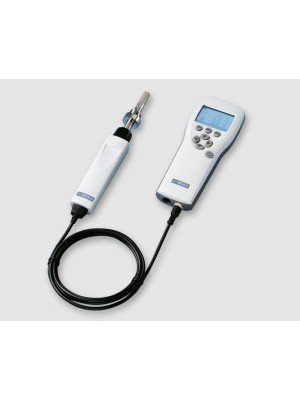
A portable dew point meter is useful for maintenance checks, commissioning and investigating differences between measurement points. For a complete portable system, select the handheld indicator, compatible dew-point probe and sampling accessories together.
Refer to the Indigo80 with DMP80 link in the application table above for portable measurement options. Confirm the required dew-point range, process pressure and gas compatibility before choosing the probe.
For permanent measurement connected to a PLC, display or monitoring system, explore the dew point transmitter range .
Pressure Dew Point and Atmospheric Dew Point
Pressure dew point describes the dew point at the compressed-air system's operating pressure. Atmospheric dew point describes the reading after the gas is reduced to atmospheric pressure. They are not interchangeable: changing the measurement pressure changes the dew point.
Before comparing a reading with a dryer specification or another instrument, confirm the pressure at which each value was measured or reported.
Getting Reliable Dew Point Measurements in Compressed Air
- Choose a representative point: Measure where the result answers the application question, such as dryer-outlet performance or conditions at a critical point of use.
- Control sampling pressure: Avoid unintended pressure drops when measuring pressure dew point.
- Maintain suitable sample flow: Follow the probe and sampling-cell instructions.
- Prevent sample contamination: Check connections for leakage and avoid condensation in the sampling line.
- Allow stabilisation: Wait for the probe and sampling arrangement to reach a stable reading before recording the result.
Frequently Asked Questions
Can a portable meter replace continuous dew point monitoring?
A portable meter provides readings during a check or logging session. It does not provide ongoing protection when disconnected. Where an unnoticed dryer problem could affect production, consider permanent measurement with an appropriate alarm system.
Can I compare readings taken at different pressures?
Not directly. Confirm the measurement pressure and reporting basis first. If conversion is needed, use a suitable calculation with the required pressure information.
What information should I provide when requesting a dew point meter?
Provide the gas, expected dew-point range, operating pressure and temperature, measurement location, and whether you need portable checks or continuous monitoring. Include any logging, output and calibration requirements.
Dew Point Measurement Application Guide
Choosing a dew point meter or transmitter for a dryer? Read our guide to dew point measurement in compressed air for measurement pressure, fixed and portable instruments, and sampling considerations.
For permanent monitoring of dryers and industrial gas systems, explore our dew point transmitters for compressed air and dryers , including compact instruments and low-dew-point probes.
Choose the Right Dew Point Measurement Approach
The best dew point instrument depends on whether the measurement is portable or permanent, the type of dryer or process, operating pressure and the required dew-point range. Use the table below as a starting point, then confirm the actual gas, pressure, temperature, process connection and required output.
| Application | Portable or Fixed | Pressure / Installation | Typical Target Range | Instrument to Consider |
|---|
| Refrigerated air dryer |
Fixed |
Up to 20 bar; normally dryer outlet |
Approximately −30 to +50 °C Td/f |
Vaisala DMT132 |
| Desiccant dryer / dry compressed air |
Fixed |
Direct or sampled measurement; confirm line pressure |
Typically below −20 °C Td/f |
Vaisala DMT143 / DMT143L |
| Pressurised compressed-air or gas pipeline |
Fixed |
0–40 bar absolute; adjustable insertion |
−70 to +80 °C Td/f |
Vaisala DMP8 |
| Ultra-dry air, nitrogen or industrial gas |
Fixed |
Vacuum to 50 bar absolute |
−80 to −20 °C Td/f |
Vaisala DMT153 |
| Maintenance checks across several dryers |
Portable |
Use a suitable sampling arrangement and confirm measurement pressure |
Probe-dependent; DMP80 options cover normal and low-dew-point work |
Vaisala Indigo80 + DMP80 |
Dew Point Measurement Guides
Use these guides to narrow the selection according to how and where the measurement will be made.
Ask Seacom about dew point measurement
Dew point transmitters Compressed-air dryer monitoring Portable dew point measurement Low dew point measurement




.png)