Industrial Moisture Measurement Instruments
Seacom supplies moisture measurement instruments for transformer oil, lubrication oil, hydraulic fluid, paper, cardboard, compressed air, dry process gases and vaporised hydrogen peroxide applications.
Moisture is measured differently in each material. Oil applications commonly use water activity or relative saturation, dry gases are usually assessed by dew point, and paper or cardboard can be screened using a material-specific capacitance meter. Selecting the correct measurement principle is therefore as important as selecting the measurement range.
Moisture Measurement Solutions Available
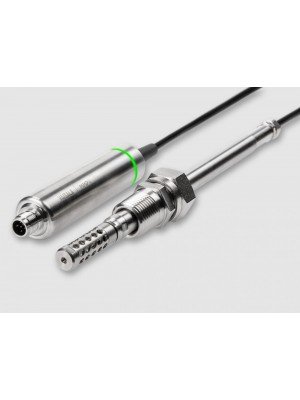
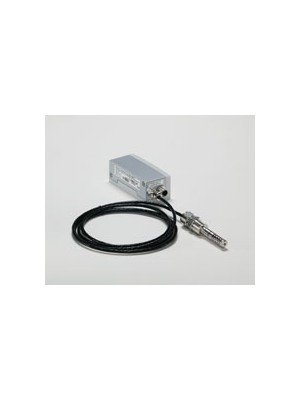
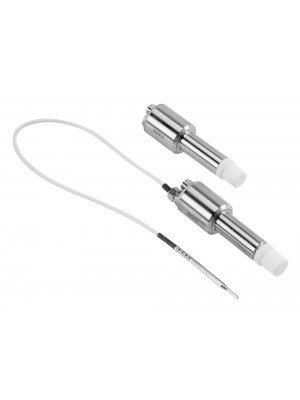
- Online moisture-in-oil probes: Continuously measure water activity, relative saturation, temperature and calculated water concentration in transformer, lubrication and hydraulic oils.
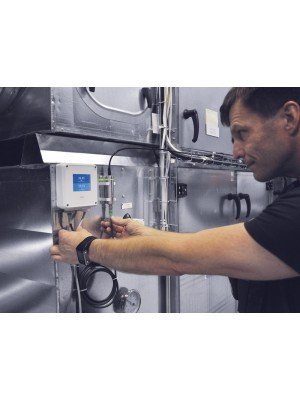
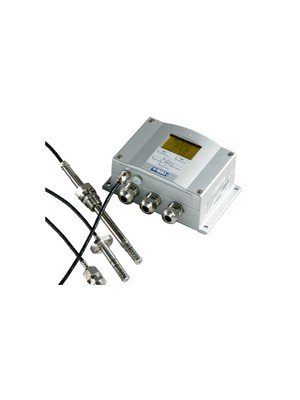
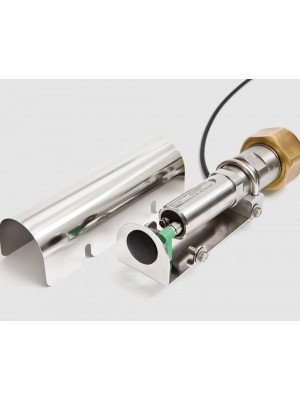
- Fixed moisture-in-oil transmitters: Provide a compact permanently installed solution with analogue or digital outputs for monitoring and control.
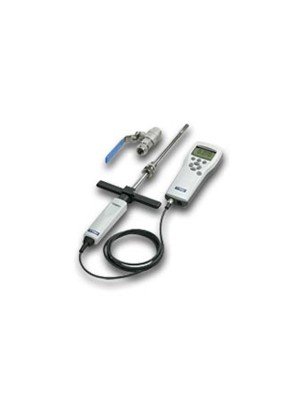
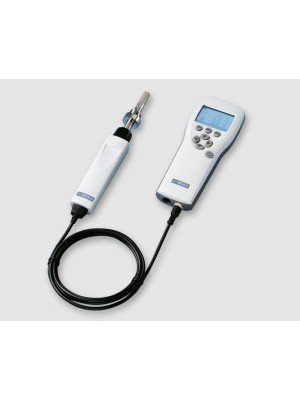
- Portable moisture-in-oil measurement: Supports field spot checks, diagnostics, temporary logging and comparison of installed probes.
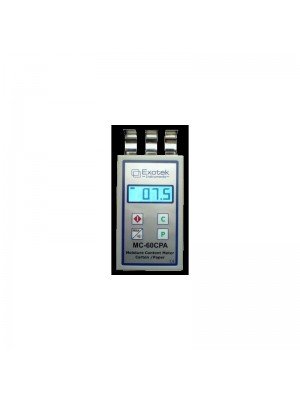
- Paper and cardboard moisture meters: Provide rapid non-destructive screening of rolls, sheets, stacks, tissue, carton and corrugated board.
- Moisture in compressed air and process gases: Uses dew-point measurement to determine dryness in air, nitrogen and compatible industrial gases.
- Vaporised hydrogen peroxide measurement: Measures H2O2 vapour concentration and, according to the selected probe, humidity, saturation and temperature during bio-decontamination.
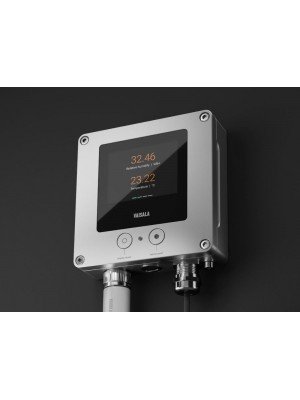
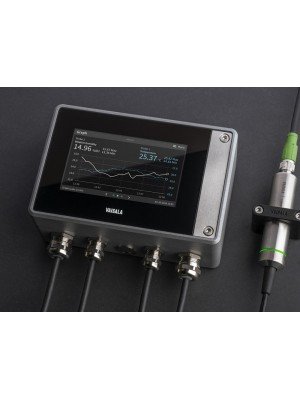
- Indigo smart-probe transmitters: Add local display, analogue outputs, relays, Ethernet and other system-integration functions to compatible Vaisala probes.
Moisture Instrument Selection by Application
Understanding Moisture in Oil Measurements
- Water activity (aw): Indicates how close the oil is to moisture saturation at its present temperature, from 0 for very dry oil towards 1 at saturation.
- Relative saturation (%RS): Expresses the same saturation relationship as a percentage from 0 to 100%RS.
- Water concentration (ppmw): Estimates the mass concentration of water and depends on the solubility characteristics of the specific oil.
- Temperature: Must be evaluated together with moisture because the amount of water an oil can dissolve changes significantly with temperature.
Water activity and relative saturation directly indicate the risk of free-water formation. A ppm calculation is useful only when the correct oil-specific solubility coefficients are available and configured.
Information Required for Moisture Instrument Selection
- Measured material: Identify the exact oil, fuel, gas, paper, cardboard or vapour being measured.
- Required parameter: State whether the result is required as water activity, relative saturation, ppm, dew point, percentage moisture or H2O2 concentration.
- Expected measurement range: Provide normal and maximum moisture levels together with the required temperature range.
- Pressure and process conditions: Specify pressure, temperature, flow, contamination and whether the process can be isolated during installation.
- Installation method: Confirm pipe or tank dimensions, process thread, insertion depth, ball-valve requirement and available service clearance.
- Fixed or portable measurement: Choose continuous online monitoring, temporary logging, routine spot checks or laboratory screening.
- Output and communication: Identify requirements for analogue output, Modbus RTU, Ethernet, Modbus TCP, relays or local display.
- Oil-specific ppm calculation: Provide the oil brand and type so the availability of suitable solubility coefficients can be checked.
- Calibration: State the required certificate, calibration points, tolerance and recalibration interval.
Common Industrial Moisture Applications
- Power transformers: Monitor dissolved moisture and the changing risk of free-water formation in insulating oil.
- Lubrication systems: Detect water ingress before it affects lubricant performance, bearings and rotating machinery.
- Hydraulic equipment: Track moisture that can contribute to corrosion, fluid degradation and component damage.
- Oil dryers and purifiers: Trend inlet and outlet moisture and control treatment cycles according to actual oil condition.
- Compressed air and process gases: Verify gas dryness using dew-point measurement under the actual operating pressure.
- Paper and packaging: Screen moisture variation in rolls, sheets, cartons and corrugated board during production, storage and incoming inspection.
- Bio-decontamination: Monitor vaporised hydrogen peroxide concentration and process humidity during chamber or room decontamination cycles.
Need Help Selecting a Moisture Instrument?
Contact Seacom with the measured material, required moisture parameter, expected range, temperature, pressure, process connection, output signal and calibration requirements. Our team can recommend a suitable moisture-in-oil probe, transmitter, portable meter, dew-point instrument or paper moisture meter.




.png)