- Out-of-Stock
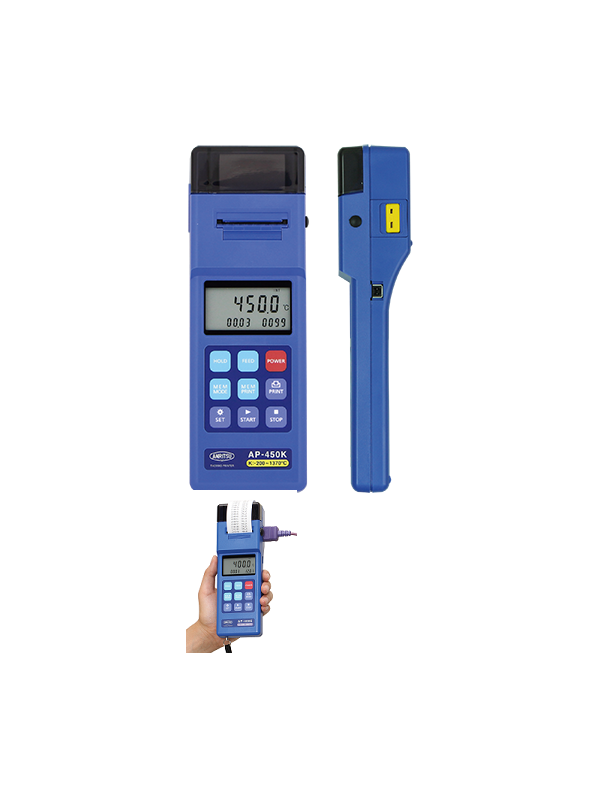
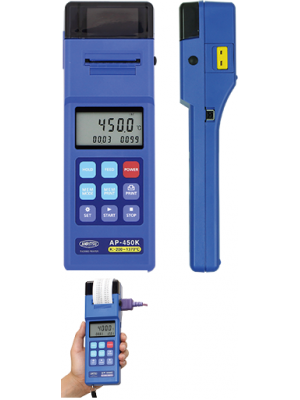



The Anritsu AP-400 Series combines a high-accuracy thermocouple thermometer with a built-in thermal printer. Measurements can be printed immediately, printed automatically at selected intervals or stored and printed later.
The Anritsu Meter AP-400 Series is useful when a temperature reading must be documented at the point of measurement. Instead of writing values down by hand or transferring data to a computer, the operator can print the measured temperature and time directly from the handheld instrument.
The built-in thermal printer supports individual readings, automatic printing at selected intervals and numbered measurement records. Up to 100 readings can also be stored in memory and printed together later. This makes the AP-400 and AP-450 suitable for inspections, maintenance rounds, production checks and verification work where a paper record is useful.

The AP-400 uses an ASP probe connector, while the AP-450 uses an ANP connector. Each instrument is manufactured for one thermocouple type, which cannot be changed from the keypad. Confirm the probe connector and thermocouple type before ordering.
| Feature | AP-400 | AP-450 |
|---|---|---|
| Input channels | 1 | 1 |
| Input connector | ASP | ANP |
| Thermocouple options | Type E or K | Type E, K, J, T or R |
| Can the thermocouple type be switched? | No; order the required type | No; order the required type |
| Typical reason to choose it | Existing ASP probes or straightforward E/K temperature measurement | ANP probe compatibility or a requirement for J, T or R thermocouples |
| Legacy replacement | Application dependent | Successor for AP-800, AP-800K, AP-800E, AP-850K and AP-850E applications, subject to probe and connector review |
| Function | How it works | Where it helps |
|---|---|---|
| Manual print | Press the print key to record the measured value with the measurement time | Individual inspection points and spot checks |
| Interval print | Automatically prints readings at the selected time interval | Short-duration process tests and temperature trends |
| Number print | Prints sequential numbering together with the measured values | Documenting a series of products, locations or test points |
| Memory print | Stores up to 100 readings and prints them as a batch | Recording measurements where immediate printing is inconvenient |
| Thermocouple type | 1 °C resolution range | Availability |
|---|---|---|
| Type E | −200 to +800 °C | AP-400 or AP-450 |
| Type K | −200 to +1370 °C | AP-400 or AP-450 |
| Type J | −200 to +1100 °C | AP-450 |
| Type T | −200 to +400 °C | AP-450 |
| Type R | 0 to +1760 °C | AP-450 |
For E, K, J and T versions, the instrument provides 0.1 °C resolution within the specified intermediate range and automatically changes to 1 °C resolution outside that range. Type R operates at 1 °C resolution.
| Thermocouple and resolution | Temperature region | Instrument accuracy |
|---|---|---|
| E, K, J or T at 0.1 °C resolution | 0 °C and above | ±(0.05% of reading + 0.2 °C) |
| E, K, J or T at 0.1 °C resolution | Below 0 °C | ±0.5 °C |
| E, K, J or T at 1 °C resolution | 0 °C and above | ±(0.1% of reading + 1 °C) |
| E, K, J or T at 1 °C resolution | Below 0 °C | ±(0.5% of reading + 1 °C) |
| Type R at 1 °C resolution | Full specified range | ±(0.1% of reading + 3 °C) |
Reference-junction compensation accuracy is ±0.2 °C at 25 °C ±10 °C. Probe accuracy, installation technique, surface contact and the response of the selected sensor must also be considered when estimating total measurement uncertainty.
| Display | LCD |
|---|---|
| Signal-source resistance | Maximum 500 Ω |
| Printer | Thermal line-dot printer, 2.5 mm character size |
| Paper | 37 mm width, approximately 1000 printed lines per roll |
| Memory | 100 measurement data |
| Clock backup | Internal lithium battery |
| Operating environment | 0 to +40 °C, 0–80% RH, non-condensing |
| Storage environment | −20 to +50 °C, 0–85% RH, non-condensing |
| Power supply | Four AA alkaline batteries or optional AC adaptor |
| Dimensions | Approximately 68 × 201 × 42 mm, excluding projections |
| Weight | Approximately 350 g including batteries |
| Linearisation | Digital linearisation compliant with IEC 60584-1:2013 |
| Print interval | Sampling rate | Approximate battery life |
|---|---|---|
| No printing | 2 times per second | 110 hours |
| 3 seconds | 2 times per second | 15 hours |
| 10 seconds | Once every 5 seconds | 60 hours |
| 30 seconds | Once every 5 seconds | 90 hours |
| 1 minute | Once every 10 seconds | 120 hours |
| 5 minutes | Once per minute | 8 days |
| 10 minutes | Once per minute | 9 days |
| 30 or 60 minutes | Once per minute | 10 days |
Battery figures are reference values and will vary with battery condition, temperature and printer use. Use the appropriate optional AC adaptor for extended stationary operation.
| Requirement | Recommended instrument | Reason |
|---|---|---|
| Immediate printed record from one probe | AP-400 or AP-450 | Built-in printer provides a paper record at the measurement location |
| Six or twelve simultaneous measurement points | Anritsu AM-9000 Series | Multi-channel logging with 120,000-data memory and USB transfer |
| Long tests requiring computer analysis | Anritsu AM-9000 Series | Higher storage capacity and optional PC analysis software |
The probe should be selected for the measurement target, not just the expected temperature. These commonly specified Anritsu probe families cover surface, internal, food and moving-surface measurements.
| Probe series | Best suited to | Why choose it |
|---|---|---|
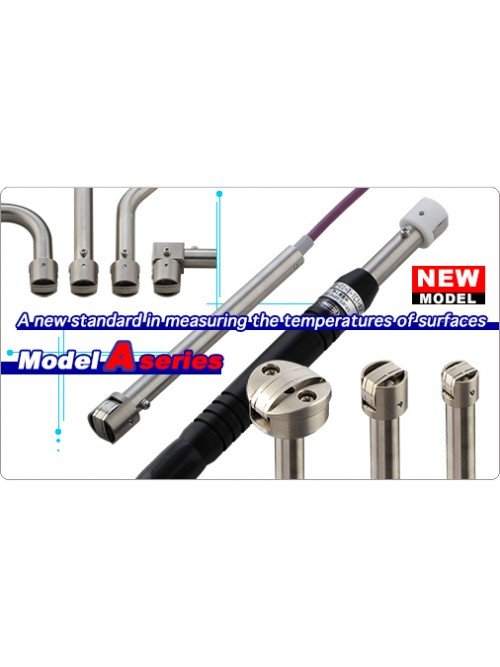 Anritsu A Series |
Stationary surfaces | General-purpose contact probe for routine surface-temperature measurements |
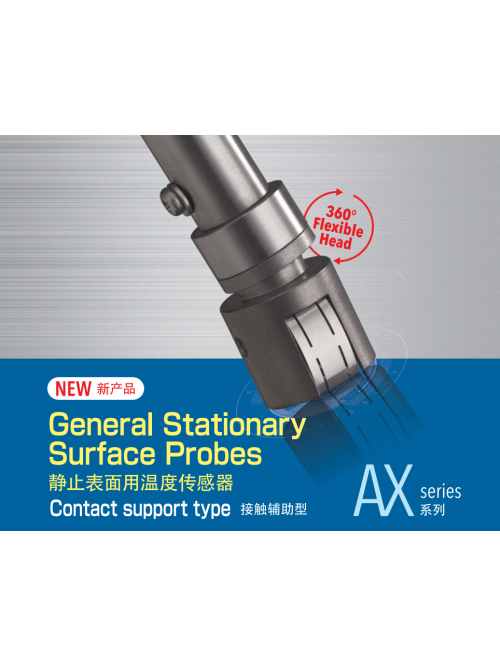 Anritsu AX Series |
Stationary surfaces where probe alignment may vary | Contact-support head helps the sensor remain closely seated against the target |
 Anritsu CS Series |
Small components and restricted surface areas | Compact sensor head reaches measurement points that are too small for a conventional surface probe |
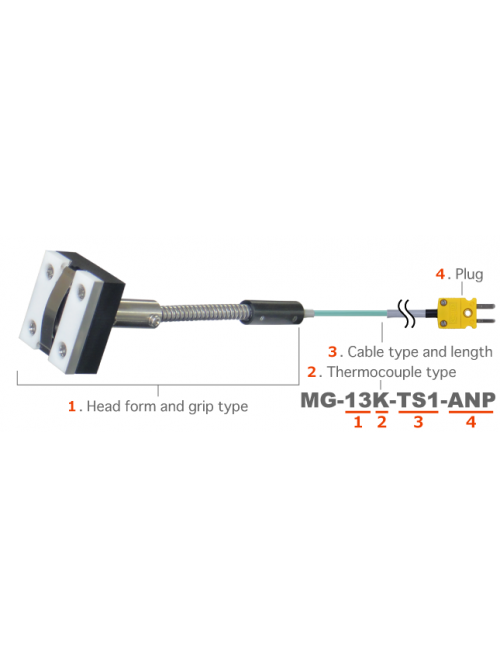 Anritsu MG Series |
Stationary ferromagnetic surfaces | Built-in magnet holds the probe in position for convenient hands-free monitoring |
 Anritsu BS Series |
Liquids and semi-solid materials | General internal-temperature probe with a configurable insertion sheath |
 Anritsu BC Series |
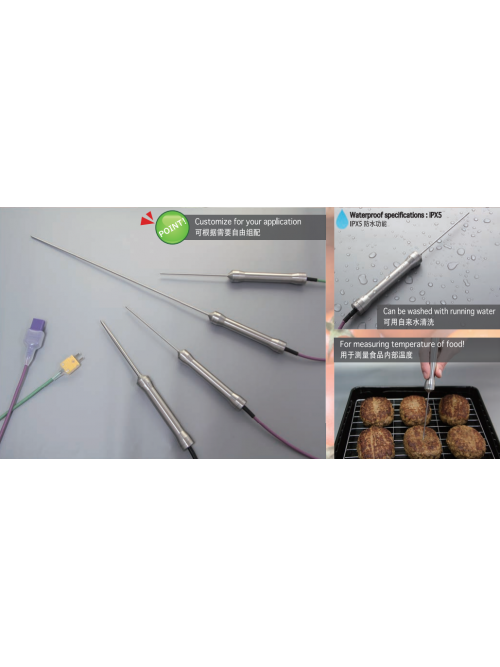
Food, liquids and semi-solid products | Washable food probe designed for hygienic centre-temperature measurement |
 Anritsu ST / STN Series |
Flat stationary surfaces and installed measurements | Thin, flexible tape-shaped sensor can be fixed directly to the measurement surface |
 Anritsu U Series |
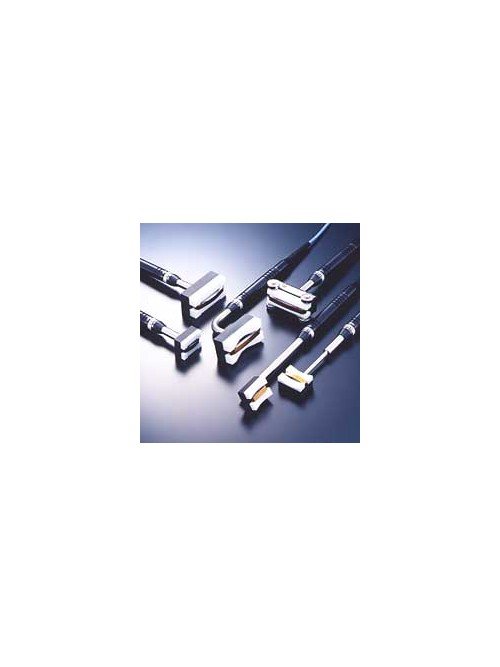
Moving or rotating surfaces | Contact-pressure control helps reduce measurement error caused by friction while improving sensor durability |
 Anritsu UX Series |
Moving or rotating surfaces where alignment may vary | Flexible contact-support head follows the target more closely and remains stable during measurement |
 Anritsu SH Series |
Small moving or rotating surfaces | Compact contact head is intended for smaller targets where a standard moving-surface probe is unsuitable |
The AP-400 requires an ASP connector, while the AP-450 requires an ANP connector. The probe thermocouple type must also match the fixed input type of the instrument. Seacom can check the complete probe code, temperature limits, head construction and cable specification for your application.
| Included with the instrument | Available separately |
|---|---|
| Soft case, four AA alkaline batteries, paper-jam fixer, instruction manual, one ACAP4 paper roll, test report and user-registration form | Application-specific temperature probe, ACAP4 print paper in packs of five, suitable AC adaptor and other probe accessories |
Temperature probes are not included. Select the probe separately according to the temperature range, target material, surface shape, response time, cable construction and AP-400 or AP-450 connector.
Seacom Process Instruments supplies the Anritsu AP-400 and AP-450 handheld thermo printers, compatible temperature probes and ACAP4 replacement print paper. Our team can help check the thermocouple type, connector, temperature range and probe construction required for the measurement.
Send us the temperature range, measurement target, probe dimensions and any existing Anritsu model or connector. We will help you select the correct thermo printer and probe combination.
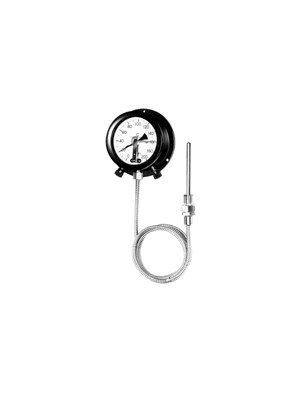
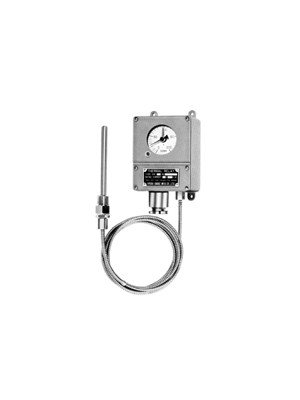
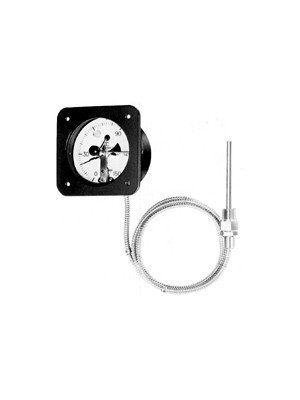
The Hyoda M Series provides remote temperature indication through a sensing bulb and capillary tube.
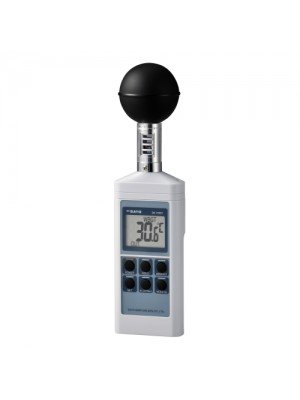
Sato SK-170GT WBGT Heat Stress Monitor is a portable all-in-one instrument for assessing heat stress in indoor and outdoor working environments.
It measures and displays the WBGT index, ambient temperature, globe temperature and relative humidity. Its built-in black globe detects radiant heat from direct sunlight, hot machinery and surrounding surfaces.
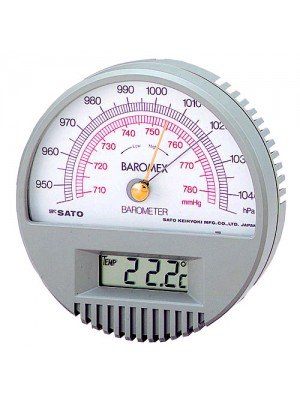
The Sato Baromex 7612-00 combines an easy-to-read analogue barometer with a digital thermometer for local atmospheric-pressure and room-temperature indication.
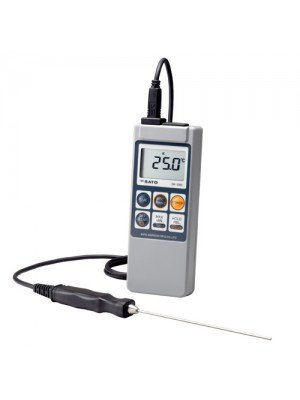
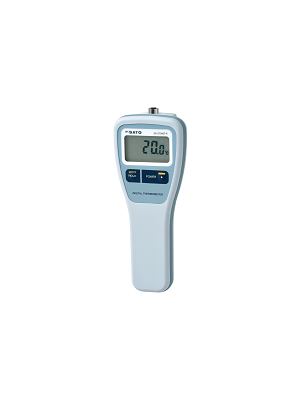
The Sato SK-1260 is a handheld digital thermometer with memory and high/low alarms, supporting dedicated thermistor and Type K thermocouple probes.
Available with the SK-S100K standard probe or as a main unit without a probe. Measuring range depends on the selected probe.
The Sato SK-270WP is a waterproof handheld digital thermometer with interchangeable probes for food temperature checks, liquids and quality control.
Measuring range and waterproof protection depend on the probe selected. The S270WP-41 surface probe is not waterproof.
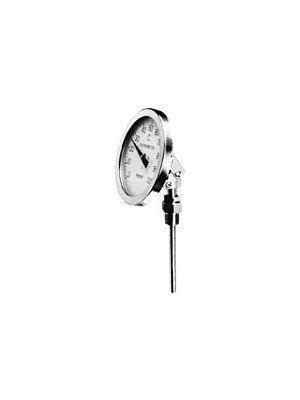
The Hyoda AY Series provides local temperature indication with a stainless steel exterior and IP65 protection.
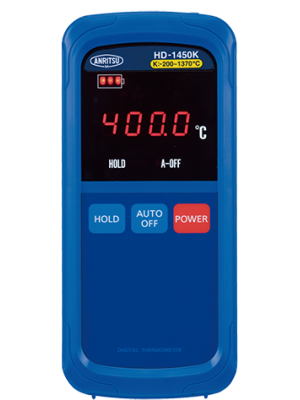
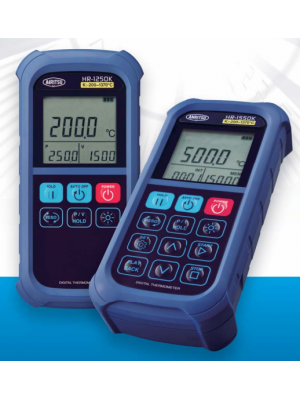
The Anritsu HD Series is discontinued. The HR Series provides replacements for the main HD handheld thermometer models.
The Hyoda KME-2 and KME-4 provide temperature switching through a remote sensing bulb and one microswitch contact.
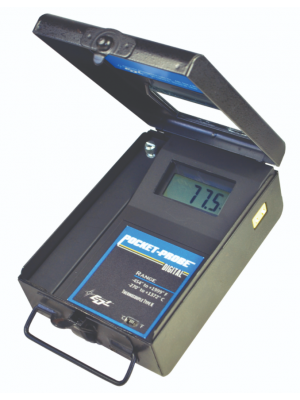
The EDL Steel-Cased Pocket-Probe is a portable digital thermocouple thermometer for production, maintenance and laboratory temperature checks.
Probes are sold separately. Match the probe’s thermocouple type and temperature range to the selected instrument.
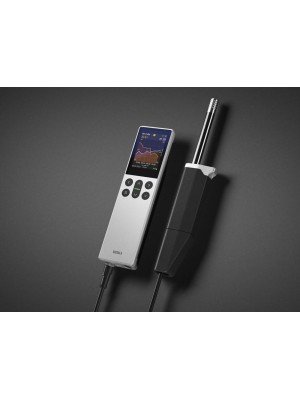
The Vaisala Indigo80 is a robust handheld indicator and data logger for industrial spot checks, process diagnostics, field calibration and measurement data analysis.
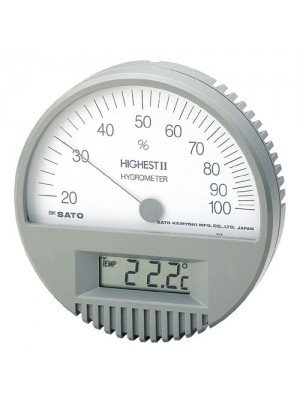
The Sato HIGHEST II combines a dial hygrometer and digital thermometer for convenient local checks of room temperature and humidity.
Anritsu AR-6500 series infrared thermometers are capable of non-contact temperature measurement and come with contact type thermometer functions
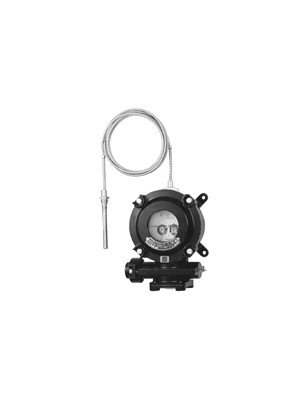
The Hyoda ES-UT is a liquid-filled temperature instrument with a remote sensing bulb and microswitch contacts.
The Anritsu HR Series combines accurate Type K or Type E thermocouple measurement with a large display and an extensive choice of probes for surfaces, moving objects, liquids, air, food and specialised applications.
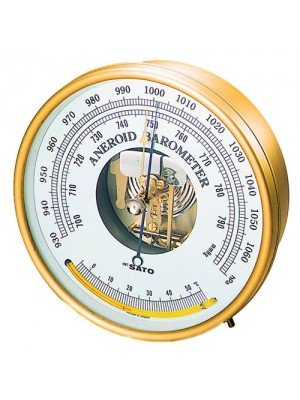
The Sato 7610-20 is a traditional brass aneroid barometer with an integrated glass thermometer for local atmospheric-pressure and temperature observation.
Hyoda fluid-filled thermometers provide temperature indication and optional switching for industrial applications.
Select the temperature scale, sensing arrangement and contact requirements to suit your installation.