


.png)








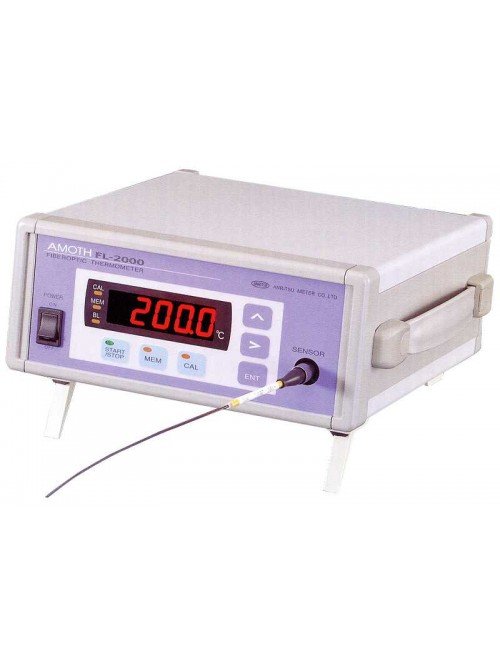
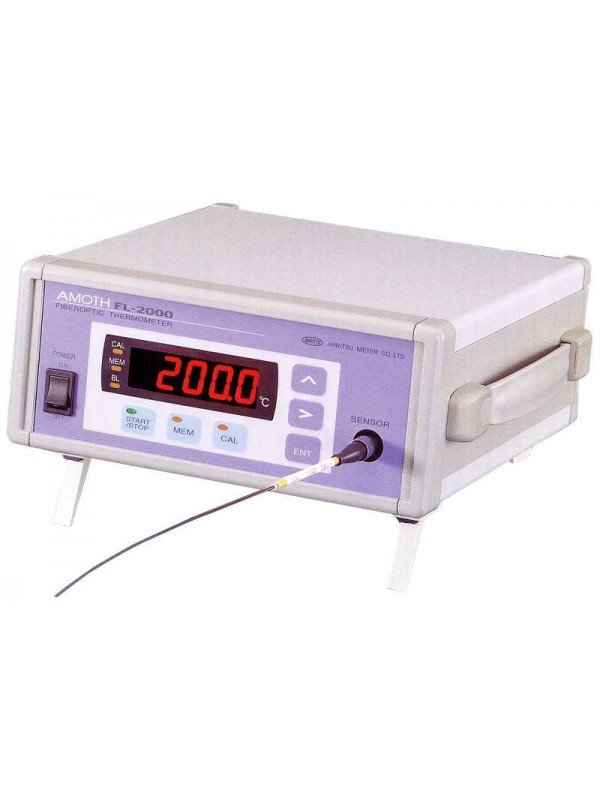
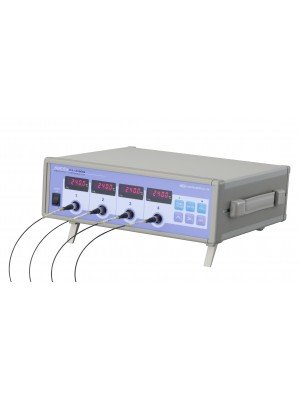
The Anritsu FL Series uses fiber optic probes to measure temperature in microwave, high-voltage and strong electromagnetic environments where conventional electrical probes may be unsuitable.
Probes are ordered separately. The usable temperature range depends on the selected probe.
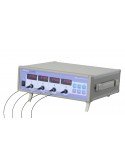
The Anritsu FL Series measures temperature using dedicated fiber optic probes in applications exposed to microwaves, strong electromagnetic fields or high voltages. Choose the FL-2000 for one measurement channel or the FL-2400 for four channels.
The optical sensing method provides an alternative where electrical interference makes conventional temperature probes difficult to use. Select the probe for the actual temperature, material and installation conditions.
| Specification | FL-2000 | FL-2400 |
|---|---|---|
| Channels | 1 | 4 |
| Instrument range | −195.0 to 450.0°C | −195.0 to 450.0°C |
| Internal memory | Up to 15,000 readings at one-second intervals | No internal memory |
| Power | Specified AC supply or six AA alkaline batteries | Specified AC supply |
| Approximate power consumption | 12 VA | 40 VA |
| Dimensions, excluding protrusions | 210 × 88 × 230 mm (W × H × D) | 320 × 99 × 280 mm (W × H × D) |
| Approximate weight | 3 kg | 5 kg |
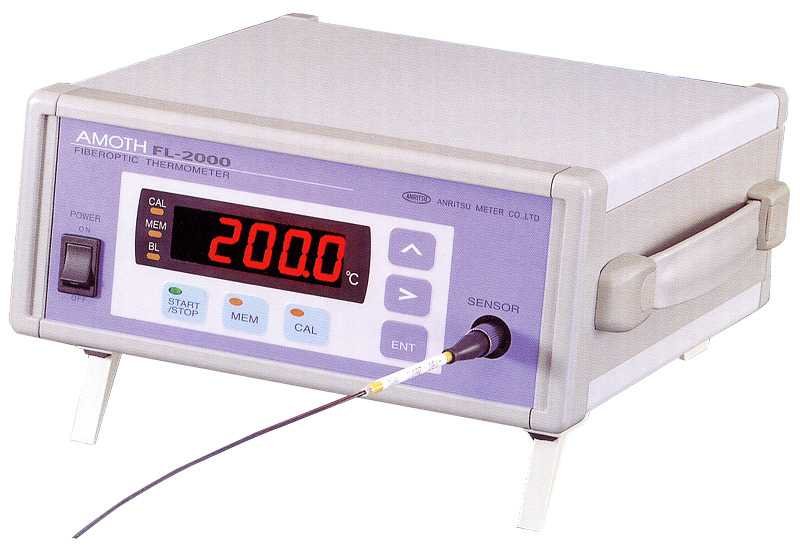
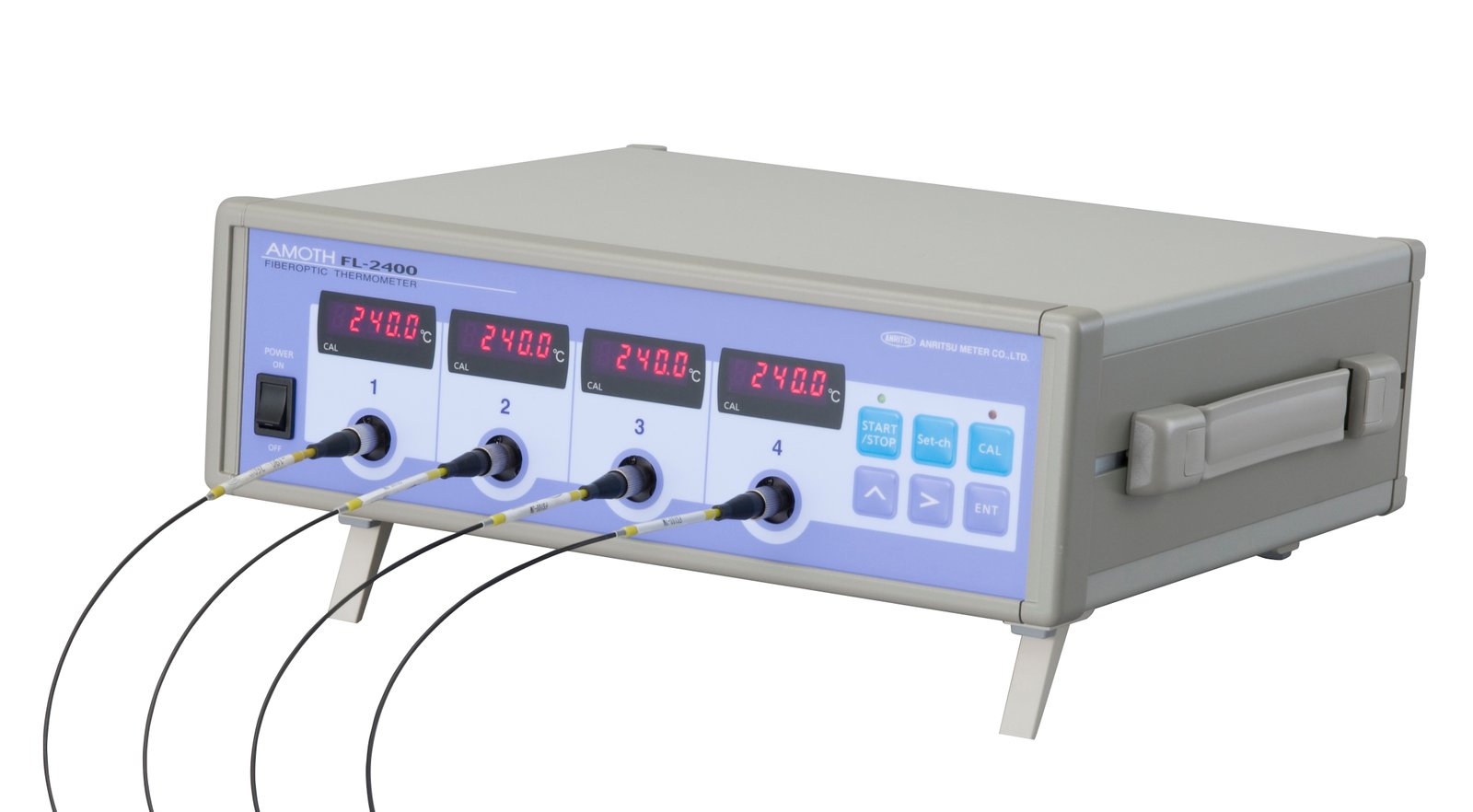
Temperature probes are ordered separately. Specify the required AC supply when ordering: the existing specification lists 100, 115 or 230 VAC configurations.
| Parameter | Published specification |
|---|---|
| Resolution | 0.1°C |
| Accuracy without calibration | ±2°C from −195.0 to 399.9°C; ±5°C from 400.0 to 450.0°C |
| Accuracy with calibration | ±0.5°C within ±50°C of the calibration point |
| Calibration method | One-point calibration at an actual temperature within the measuring range |
| Operating environment | 0 to 40°C; 15 to 80% RH, non-condensing |
| Communication | RS-232C, 9600 bps |
| Analog output | 10 mV/°C; 1 mV resolution |
The instrument’s range does not extend the rating of a connected probe. Use the narrower applicable range and confirm the calibration conditions required for your measurement.
Each probe below is shown with its existing product picture. Model-code asterisks indicate ordering selections, such as cable length or coating length; confirm the complete code before ordering.
| Specification | FS100-*M |
|---|---|
|
|
|
| Temperature range | −190 to 260°C |
| Selection guidance | General measurements involving microwaves or electromagnetic fields. |
| Repair classification | Listed as repairable; assessment depends on the damage |
| Specification | FS150-*M |
|---|---|
|
|
|
| Temperature range | −190 to 260°C |
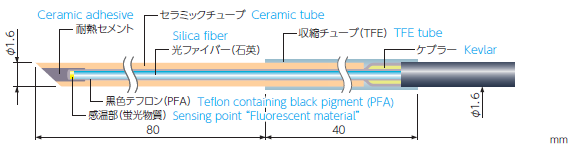
| Selection guidance | A more robust tip arrangement with the sensing section the same thickness as the cable. |
| Repair classification | Listed as repairable; assessment depends on the damage |
| Specification | FS100H-**-*M |
|---|---|
|
|
|
| Temperature range | −190 to 260°C |
| Selection guidance | For compatible oils, liquids and chemicals; select the required coating configuration. |
| Repair classification | Listed as repairable; assessment depends on the damage |
| Specification | FS150H-**-*M |
|---|---|
|
|
|
| Temperature range | −190 to 260°C |
| Selection guidance | Liquid and chemical-resistant construction with a more robust tip arrangement. |
| Repair classification | Listed as repairable; assessment depends on the damage |
| Specification | FS200-*M |
|---|---|
|
|
|
| Temperature range | −30 to 200°C |
| Selection guidance | For compatible chemicals; confirm the fluid and concentration before selection. |
| Repair classification | Listed as repairable; assessment depends on the damage |
| Specification | FS300-*M |
|---|---|
|
|
|
| Temperature range | −190 to 260°C |
| Selection guidance | For measurements exposed to intense light, including laser or plasma environments. |
| Repair classification | Listed as repairable; assessment depends on the damage |
| Specification | FS400-*M |
|---|---|
|
|
|
| Temperature range | −20 to 400°C |
| Selection guidance | For high-temperature materials, including semiconductor applications; not for liquids. |
| Repair classification | Listed as repairable; assessment depends on the damage |
| Specification | FS500-*M |
|---|---|
|
|
|
| Temperature range | −60 to 260°C |
| Selection guidance | For insertion into semisolid samples such as food. |
| Repair classification | Listed as repairable; assessment depends on the damage |
| Specification | FS600-*M |
|---|---|
|
|
|
| Temperature range | 0 to 80°C |
| Selection guidance | For specialised research applications involving MRI, NMR or hyperthermia equipment; confirm the complete installation requirements. |
| Repair classification | Not repairable |
Check the complete optical connection arrangement, routing and mechanical support before selecting extensions or fittings.
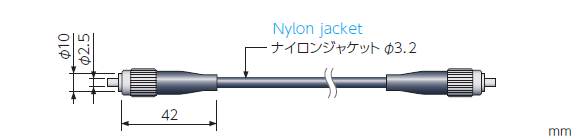
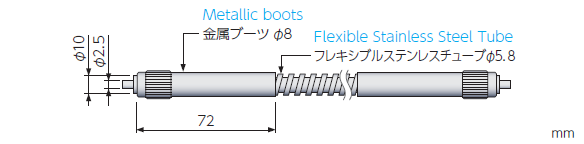
Extension cable for standard installations.
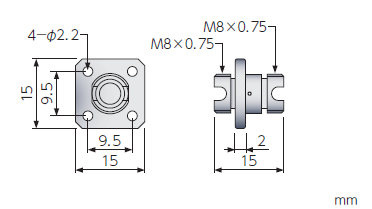
Extension cable for more demanding installation environments.
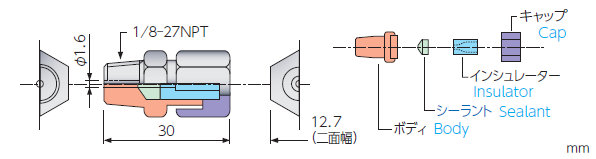
Connects a probe to an extension cable.
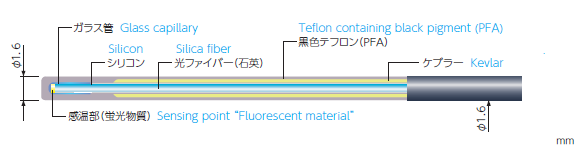
NPT 1/8 fitting with TFE sealant material.
NPT 1/8 fitting with Viton sealant material.
For a vacuum or pressure-vessel installation, confirm the rating of the complete probe-and-fitting assembly at the operating temperature. The published FN1 test uses a stainless steel rod and must not be treated as an unconditional pressure rating for every fiber probe installation.
The existing product documentation specifies AMS-850 software and RS-232C communication. The FL-2000 provides internal memory, whereas the FL-2400 requires an external data-collection arrangement when records are needed.
Confirm software, operating-system and connection compatibility before ordering. The existing page lists older Windows versions; it does not establish Windows 11 support.
Contact Seacom Process Instruments Sdn Bhd with your temperature range, number of channels, sample material and measurement environment. For an existing system, include the instrument and probe model numbers.
Download |

.

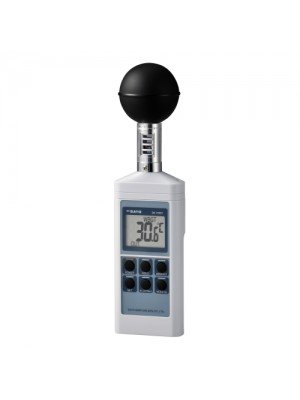
Sato SK-170GT WBGT Heat Stress Monitor is a portable all-in-one instrument for assessing heat stress in indoor and outdoor working environments.
It measures and displays the WBGT index, ambient temperature, globe temperature and relative humidity. Its built-in black globe detects radiant heat from direct sunlight, hot machinery and surrounding surfaces.
Anritsu AR-6500 series infrared thermometers are capable of non-contact temperature measurement and come with contact type thermometer functions

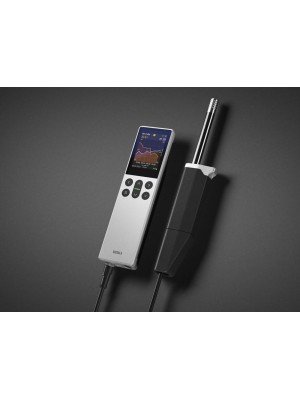
The Vaisala Indigo80 is a robust handheld indicator and data logger for industrial spot checks, process diagnostics, field calibration and measurement data analysis.

The Hyoda AY Series provides local temperature indication with a stainless steel exterior and IP65 protection.
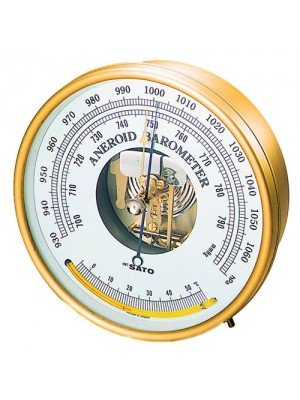
The Sato 7610-20 is a traditional brass aneroid barometer with an integrated glass thermometer for local atmospheric-pressure and temperature observation.
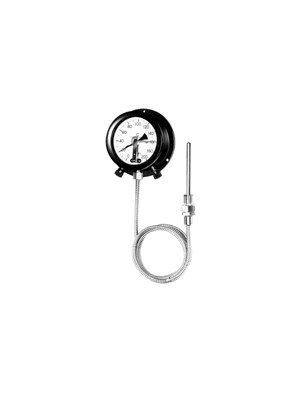
The Hyoda S6 is a fluid-filled thermometer with a 150 mm dial and remote sensing bulb connected by capillary tube.
The Hyoda ES-UT is a liquid-filled temperature instrument with a remote sensing bulb and microswitch contacts.
The Hyoda KME-2 and KME-4 provide temperature switching through a remote sensing bulb and one microswitch contact.
The Anritsu HD Series is discontinued. The HR Series provides replacements for the main HD handheld thermometer models.
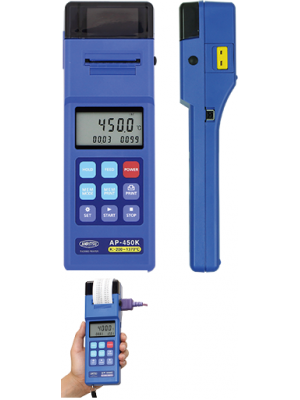
The Anritsu AP-400 Series combines a high-accuracy thermocouple thermometer with a built-in thermal printer. Measurements can be printed immediately, printed automatically at selected intervals or stored and printed later.
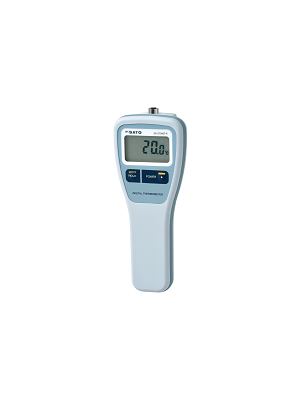
The Sato SK-270WP is a waterproof handheld digital thermometer with interchangeable probes for food temperature checks, liquids and quality control.
Measuring range and waterproof protection depend on the probe selected. The S270WP-41 surface probe is not waterproof.
The Hyoda M Series provides remote temperature indication through a sensing bulb and capillary tube.
The Anritsu FL Series uses fiber optic probes to measure temperature in microwave, high-voltage and strong electromagnetic environments where conventional electrical probes may be unsuitable.
Probes are ordered separately. The usable temperature range depends on the selected probe.




 FL Series Catalogue
(1.25M)
FL Series Catalogue
(1.25M)