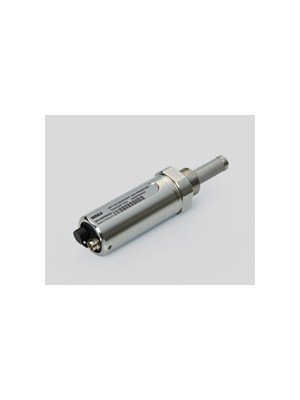
Pressure Data Loggers and Pressure Chart Recorders
A pressure data logger records pressure measurements over time, helping users investigate operating conditions, compare equipment performance and retain measurement records. Seacom supplies pressure logging and recording instruments for equipment monitoring, testing and industrial applications.
Choose a digital pressure logger for electronic records, a pressure chart recorder for a visible paper trace, or a compatible transmitter and recording system for permanently installed monitoring. Selection depends on the measured medium, pressure range, recording interval and required data format.
Choose a Pressure Recording Method
| Instrument type | Recording approach | Suitable requirement |
|---|
| Digital pressure data logger |
Stores measurements electronically for subsequent retrieval and review. |
Temporary investigations, routine equipment checks and pressure-trend analysis. |
| Pressure chart recorder |
Produces a pressure trace on a moving paper chart. |
Local visual records and applications using paper-based documentation. |
| Pressure transmitter with a separate logger |
Sends a measurement signal to compatible recording equipment. |
Permanent monitoring, multiple measurement points or integration with an existing system. |
Pressure Logger and Recorder Product Selection
| Product | Main function | Selection considerations |
|---|
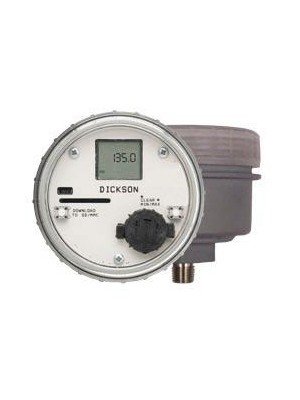
| Dickson PR Series Pressure Data Loggers |
Electronic pressure recording using a dedicated data logger. |
Compare PR125, PR325 and PR525 configurations. Confirm pressure range, sampling interval, memory and data-retrieval requirements. |
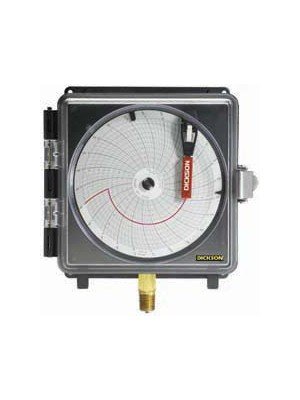
| Dickson PW4 and PW8 Pressure Chart Recorders |
Paper-chart pressure recording using a 4-inch or 8-inch chart format. |
Select the pressure range, chart size, recording duration, process connection and matching charts and pens. |
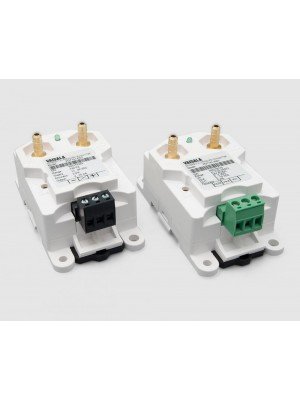
| Vaisala PDT101 and PDT102 |
Differential-pressure measurement for connection to compatible monitoring or recording equipment. |
Review low-pressure range, output signal, pressure tubing and receiving-system compatibility. These transmitters are not standalone data loggers. |
Confirm the complete model configuration and availability before ordering. Instruments used for pipeline pressure, atmospheric pressure and room differential pressure are not automatically interchangeable.
Applications for Pressure Data Logging
- Equipment monitoring: Record pressure changes during normal operating cycles and compare trends over time.
- Pipeline investigations: Monitor pressure at selected points using an instrument rated for the medium, temperature and operating pressure.
- Testing and commissioning: Retain pressure records where the instrument's performance meets the test procedure.
- Maintenance troubleshooting: Investigate intermittent changes that may be missed during a manual gauge check.
- Cleanroom monitoring: Use suitable low differential-pressure transmitters and compatible recording equipment to monitor pressure relationships between spaces.
Gauge, Absolute or Differential Pressure?
Identify the required pressure reference before choosing an instrument. A suitable measuring range alone does not establish compatibility.
- Gauge pressure: Measures pressure relative to local atmospheric pressure and is commonly used for line and equipment pressure.
- Absolute pressure: Measures pressure relative to a vacuum reference. Atmospheric-pressure measurement is one application.
- Differential pressure: Measures the difference between two pressure points, such as adjacent rooms or the two sides of a filter.
For atmospheric-pressure instruments, explore our barometers and barometric pressure instruments . For other measurement requirements, browse the pressure instrument range .
What to Check Before Selecting a Pressure Logger
- Pressure range: Provide the normal operating pressure and expected maximum, including possible surges.
- Measured medium: Identify the liquid or gas and confirm compatibility with the sensor, seals and fittings.
- Process temperature: Check the allowable medium temperature separately from the ambient temperature rating.
- Accuracy: Confirm whether the specification is expressed as a percentage of full scale or of the reading.
- Connection: Match the thread type, fitting, seal and installation arrangement.
- Recording interval: Select a rate suitable for the pressure changes being investigated.
- Record duration: Review memory, battery life or chart duration against the required monitoring period.
- Data access: Confirm software, connection cables, export functions and computer compatibility.
- Calibration: Specify relevant calibration points and documentation requirements.
Recording Interval and Fast Pressure Changes
A logger that records slowly may show general pressure trends while missing brief peaks or dips. The stored recording interval, sensor response and internal measurement rate must all suit the event being investigated.
For water hammer or other rapid transients, confirm that the instrument is specifically capable of capturing the required event duration. A general-purpose pressure logger or paper-chart recorder should not be assumed to provide high-speed transient recording.
Installation and Record Keeping
Use pressure-rated connections and follow the instrument manufacturer's installation instructions. Provide suitable isolation and safe access for fitting, removal and calibration. Do not exceed the instrument's pressure, temperature or media-compatibility limits.
Before recording, check the date and time, units, measurement range, recording interval and available storage. For chart recorders, verify the correct chart, pen and chart-speed setting.
Keep the instrument identification, calibration information, measurement location and test conditions with the resulting records so that readings can be interpreted correctly.
Frequently Asked Questions
What is the difference between a pressure gauge and a pressure data logger?
A pressure gauge indicates the pressure at the measurement point. A pressure data logger stores readings over time. Some instruments combine a local display with logging, but recording capability should be confirmed for the selected model.
Should I choose a digital logger or a paper-chart recorder?
Choose a digital logger when electronic storage and data review are important. Choose a chart recorder when a visible paper trace fits the operating procedure. Consider recording duration, data handling and ongoing consumable requirements.
Can a pressure transmitter record data by itself?
Not necessarily. Many transmitters provide only an analogue or digital measurement output. Recording requires a compatible logger, controller or monitoring system unless onboard storage is explicitly included.
Can one pressure logger measure both liquids and gases?
Only where the instrument is rated for the specific medium and operating conditions. Confirm wetted-material compatibility, temperature limits and pressure rating before use.
Can a pipeline pressure logger monitor cleanroom differential pressure?
Usually a different measurement arrangement is required. Cleanroom applications need a suitable differential-pressure sensor with the appropriate low-pressure range, connections and recording interface.
Seacom Product Selection and Technical Support
Seacom Process Instruments supplies measurement instruments and provides technical support for product selection, installation requirements and system integration. Our team can help review your application and identify a suitable model, configuration and accessories.
For pressure recorder and data logger enquiries, share the measured medium, pressure range, process temperature, connection type, required recording interval and duration, and any calibration or data-export requirements.
Email: seacom@seacom.com.my
WhatsApp: +60 16 208 0697



.png)