



.png)








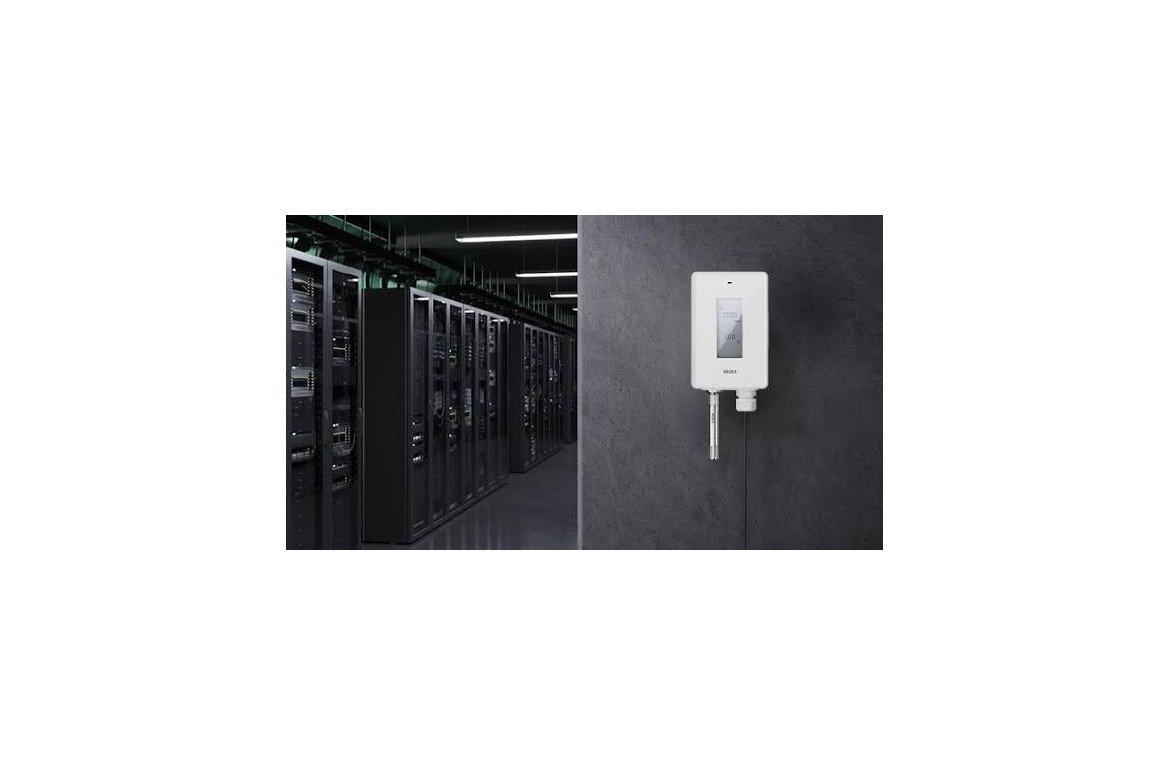
Data Center Humidity and Temperature Monitoring in Malaysia
Data Center Humidity Monitoring: Measure Where It Matters
A humidity reading is only useful when it represents the conditions you need to control. In a data centre, a wall sensor, a rack-inlet probe and a transmitter in the return-air duct can report different conditions without any of them being faulty.
Seacom Process Instruments helps customers in Malaysia select humidity and temperature instruments for data centres, server rooms and cooling systems. We can also review related requirements for differential pressure, cooling-water flow, coolant concentration and continuous monitoring.
Why Measure Humidity and Temperature Together?
Relative humidity depends on temperature. Air can show a lower relative humidity after it warms up even when its moisture content has not changed. Comparing readings from a cold aisle and a warm return-air path therefore requires both measurements.
For data centre humidity monitoring, the useful question is not simply “What is the room humidity?” It is “Does this measurement represent the air reaching the equipment, the air leaving the cooling system, or the conditions around a cold surface?”
Relative Humidity or Dew Point?
Relative humidity describes how close the air is to saturation at its current temperature. Dew point is the temperature at which that air would become saturated. A surface colder than the surrounding air’s dew point can develop condensation.
Dew point can therefore be useful when reviewing moisture conditions around cooling equipment. Selected humidity transmitters provide calculated dew point alongside temperature and relative humidity; confirm the available parameters and outputs for the chosen model.
What Humidity Range Should a Data Centre Use?
Use the limits specified for the installed IT equipment, the facility design and the applicable environmental guidance. Avoid applying one generic humidity percentage to every server room or cooling arrangement. Define the measurement location, operating limits and alarm response together.
Where Should Data Centre Sensors Be Installed?
| Measurement location | Purpose | Selection consideration |
|---|---|---|
| Server rooms and support spaces | Follow local temperature and humidity conditions. | Choose a representative position away from local heat sources. |
| Rack inlets and cold aisles | Assess the conditions of air delivered to equipment. | Review rack layout, measurement height and cable routing. |
| Supply and return ducts | Compare conditions through the air-handling system. | Check probe length, access and the intended measurement point. |
| Outdoor-air intake | Provide information for the selected cooling strategy. | Specify suitable outdoor protection and representative placement. |
A floor plan and cooling schematic are useful starting points. Before adding more sensors, identify what each reading will tell the operator and which system will use it.
Vaisala Humidity Sensors for Data Centre Applications
Room Measurement: Vaisala HMW90
The HMW90 series provides humidity and temperature measurement for building environments. It is a starting point for room monitoring where wall mounting suits the application. Check the selected model’s outputs and installation requirements against the monitoring specification.
View Vaisala HMW90 humidity and temperature transmitters
Duct Measurement: Vaisala HMD60
The HMD60 series is designed for humidity and temperature measurement in demanding HVAC ducts. It can be considered for supply and return air measurements, with the exact model selected for the required measurement parameters and analogue or digital interface.
View Vaisala HMD60 duct transmitters
Other Mounting and Measurement Requirements
A wall or duct transmitter will not suit every location. Vaisala’s range also includes compact probes and other transmitter arrangements. Share the available space, mounting position, required accuracy and connection method so we can review suitable options.
Connecting Sensors to BMS and Continuous Monitoring
Specify the required interface before choosing the instrument. Confirm the signal or protocol, available controller inputs, power supply and which measurements must be transmitted. Communication options vary by product and configuration.
Also decide whether you need readings for control, historical records, alarms, or a combination. Vaisala viewLinc can be considered where independent continuous monitoring is required, subject to the selected measurement devices and system architecture.
Explore Vaisala viewLinc continuous monitoring
Cooling-Water Temperature and Flow
Environmental monitoring also connects to the cooling plant. Supply and return water temperatures, together with flow, help describe cooling-circuit operation.
The Vaisala TMI110 is an immersion temperature transmitter for HVAC cooling and heating water. The Badger Meter M2000 can be reviewed for compatible conductive cooling-water services. Confirm the fluid, operating range and installation conditions before selecting either instrument.
View Vaisala TMI110 water-temperature transmitters
View Badger M2000 flow meters for data centre cooling
For glycol circuits, coolant concentration may also need monitoring. ATAGO inline refractometers offer dedicated glycol models; selection should follow the actual coolant formulation.
Explore ATAGO inline refractometers
Planning flow measurement for your cooling circuit? Our guide covers Badger Meter and ONICON options, fluid compatibility and installation considerations.
Choosing flow meters for data centre cooling
Discuss Your Data Centre Measurement Requirements
Send us your equipment schedule, room layout or existing sensor model. Include the measurement locations, required ranges, preferred outputs and quantity where available. We can help review humidity, temperature, pressure, flow and monitoring requirements as part of the same project.
All comments