


.png)






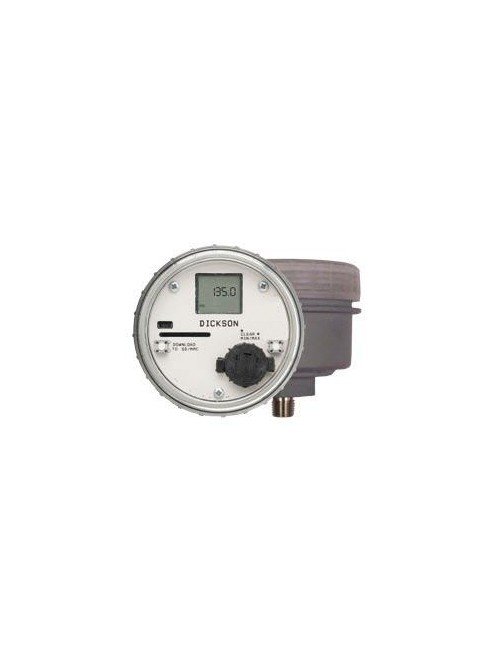
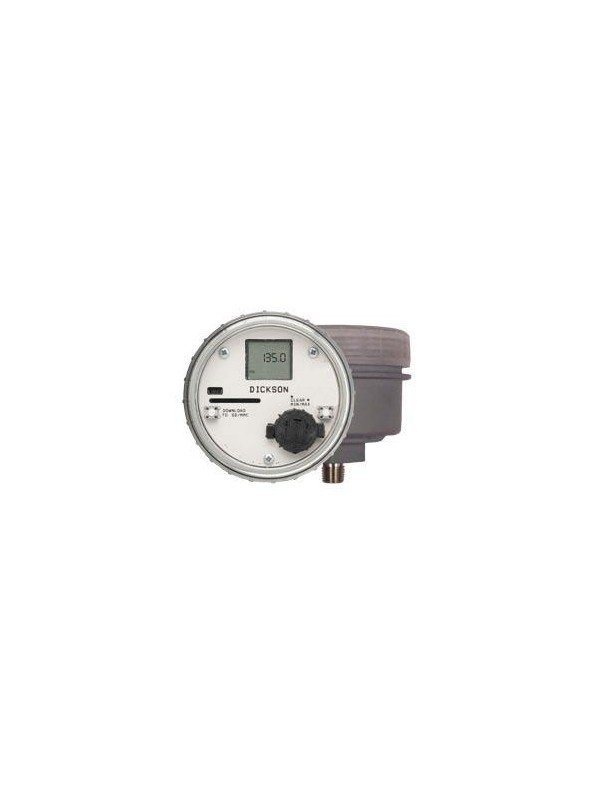
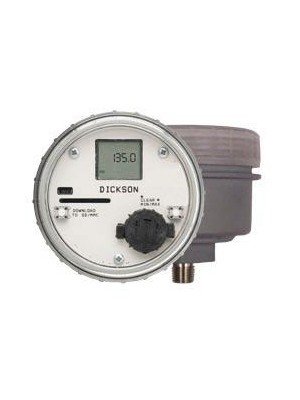
The Dickson PR125, PR325 and PR525 are rugged battery-powered pressure data loggers for recording equipment and line pressure without a permanently connected computer.
The Dickson PR Series records pressure directly at a pipe, vessel or equipment connection and stores the readings for later review. Its battery operation, local display and IP68 enclosure suit temporary surveys, troubleshooting, maintenance checks and unattended pressure studies where a permanently wired monitoring system is unnecessary.
Recorded data can be reviewed using compatible DicksonWare software and exported for reports, spreadsheets and investigation records. Select the model from the maximum expected operating pressure—not only the normal reading.
Current model range: Dickson's present product selector lists PR125, PR325 and PR525. The PR120 and PR320 should be treated as legacy configurations rather than current selectable models.
| Model | Pressure range | Best starting point | Selection consideration |
|---|---|---|---|
| PR125 | 0 to 100 PSI | Lower-pressure equipment, water systems, filters and regulated air lines | Offers the best resolution of the three models when pressure always remains below 100 PSI |
| PR325 | 0 to 300 PSI | General compressed-air, hydraulic and industrial pressure surveys | Provides additional headroom where pressure can exceed 100 PSI |
| PR525 | 0 to 500 PSI | Higher-pressure hydraulic or process equipment | Do not select the widest range automatically if lower-range resolution is important |
Allow for pressure peaks: compare the selected range with normal pressure, startup pressure, pump dead-head conditions, regulator failure scenarios and possible transient spikes. A logger must never be exposed beyond its permitted pressure limit.
The stated pressure accuracy is ±1% of full scale, so the absolute uncertainty changes with the selected model range.
| Model | Full scale | ±1% of full scale | Practical implication |
|---|---|---|---|
| PR125 | 100 PSI | ±1 PSI | Preferred when all expected pressure remains within the 100 PSI range |
| PR325 | 300 PSI | ±3 PSI | Suitable where a 300 PSI range is genuinely required |
| PR525 | 500 PSI | ±5 PSI | Provides the highest range but the largest absolute full-scale uncertainty |
For example, selecting PR525 for a process normally operating around 20 PSI gives considerably more range than needed but does not provide the same useful low-pressure discrimination as PR125. Range selection should balance headroom against the required measurement resolution and uncertainty.
| Specification | PR125, PR325 and PR525 |
|---|---|
| Pressure ranges | 0–100, 0–300 or 0–500 PSI according to model |
| Pressure accuracy | ±1% of full scale |
| Measurement channel | One pressure channel |
| Selectable units | PSI, atm, bar, mbar, inH₂O, ftH₂O, mmH₂O, mmHg, inHg, Pa, kPa and MCA |
| Sample interval | User selectable from 1 second to 24 hours |
| Storage capacity | Up to 64,768 readings |
| Display | Segmented LCD with approximately 20-second refresh |
| Display functions | Current pressure, minimum/maximum, engineering unit and battery indication |
| Data retrieval | USB or USB/flash-card option depending on configuration |
| Software | Compatible DicksonWare software; confirm licence and version requirements |
| Process fitting | 1/4-inch NPT thread with stainless-steel hex |
| Enclosure | Glass-filled polycarbonate with stainless-steel process connection |
| Ingress protection | IP68 |
| Operating temperature | Approximately −20 to +70 °C |
| Operating humidity | 0 to 100 %RH |
| Typical battery life | Approximately six months at a five-minute sample interval; actual life depends on use |
| Method | Recommended when | Before ordering |
|---|---|---|
| USB connection | The logger can be connected directly to a computer for setup and download | Confirm computer access, cable, software and operating-system compatibility |
| Flash-card transfer | Data must be collected without removing or directly connecting the installed logger | Confirm the exact logger configuration, supported media and site data-handling procedure |
DicksonWare is normally required to configure the logger and work with downloaded readings. Confirm whether the software, download accessory and calibration documentation are included or must be ordered separately.
| Monitoring objective | Suggested starting interval | Trade-off |
|---|---|---|
| Short transient investigation | 1 to 10 seconds | Captures faster events but fills memory sooner and can reduce battery life |
| Equipment-cycle analysis | 10 seconds to 1 minute | Balance the interval against the shortest relevant machine cycle |
| Routine process trending | 1 to 5 minutes | Provides longer recording duration while preserving useful operational detail |
| Long-duration stable-pressure study | 5 minutes or longer | Extends recording duration but may miss brief pressure excursions |
Set the interval according to the shortest event that matters. A long sample interval can completely miss a brief pressure drop or compressor-cycle fluctuation even when the logger operates correctly.
| Application | What the logger can reveal | Installation priority |
|---|---|---|
| Compressed-air survey | Pressure variation, compressor cycling and pressure loss during peak demand | Choose a safe connection point and account for oil, condensate and pressure spikes |
| Filter or regulator evaluation | Changing downstream pressure and performance over time | A single logger records one point; differential assessment normally requires coordinated measurements |
| Pump and water-system checks | Start/stop behaviour, pressure cycling and intermittent loss | Protect the connection from water hammer and pressure surges |
| Hydraulic equipment | Operating-pressure patterns during machine cycles | Confirm media compatibility, temperature and maximum transient pressure |
| Maintenance troubleshooting | Intermittent pressure events that are difficult to observe manually | Synchronise logger time with equipment and maintenance records |
| Quality documentation | Time-stamped pressure records for review and reporting | Define calibration, access control and record-retention requirements before use |
| Selection point | Dickson PR Series | Dickson PW Series |
|---|---|---|
| Record format | Electronic readings downloaded for analysis and reporting | Continuous trace on replaceable circular chart paper |
| Available pressure ranges | 100, 300 or 500 PSI according to model | Multiple 100, 300 and 500 PSI chart-recorder configurations |
| Local indication | Digital pressure display | Pen position and chart provide an immediate visual trend |
| Analysis | Search, graph and export electronic data using compatible software | Review the physical chart without a computer |
| Consumables | Battery and any required data-transfer media | Chart paper, pens and batteries |
| Best fit | Detailed electronic surveys and reusable data files | Simple on-site visual records and established paper-chart procedures |
| Product information | PR125, PR325 and PR525 | Explore Dickson PW Pressure Recorders |
PR120 and PR320 may still exist at customer sites or in older documentation, but they are not shown in Dickson's current PR Series model selector. When replacing or supporting an installed unit, provide its full model number, serial number, pressure range, download method and software version.
Do not assume a current PR125 or PR325 is an exact drop-in replacement without checking the process fitting, pressure range, accessories, file workflow and validation requirements.
Seacom Process Instruments supplies and supports Dickson PR125, PR325 and PR525 pressure data loggers for compressed air, water systems, hydraulic equipment, maintenance troubleshooting and industrial pressure studies in Malaysia and international markets.
Our team can help select the pressure range, sampling interval, download arrangement, software and calibration option. We can also review legacy PR120 or PR320 replacement requirements from the installed model details.
Selecting a pressure logger? Send us the process medium, normal and maximum pressure, possible pressure spikes, process temperature, connection size, logging duration, shortest event to capture, download preference and calibration requirements.
Download |

.
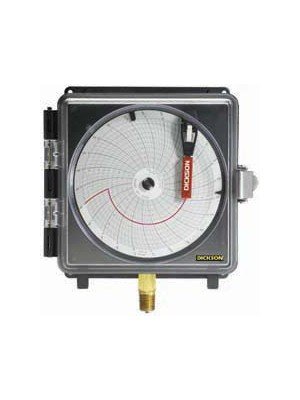
The Dickson PW4 and PW8 provide a continuous paper record of pressure at the measurement point for equipment monitoring, testing, troubleshooting and permanent visual documentation.
.

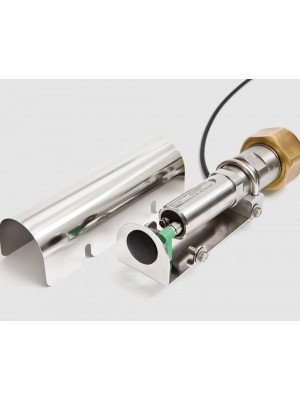
The Vaisala DPT145 provides online dew-point, pressure and temperature measurement for SF6-insulated electrical equipment. The model is being discontinued and should not be specified for new projects.
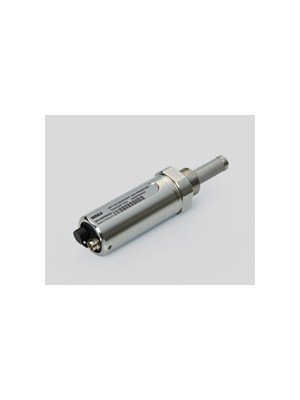
The Vaisala DPT146 combines dew-point and process-pressure measurement in one compact transmitter for compressed-air systems. This model is discontinued and should not be selected for new projects.
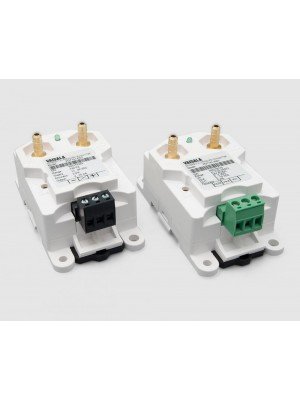
The Vaisala PDT101 and PDT102 provide precise low differential-pressure measurement for cleanrooms, isolation rooms, regulated facilities, data centres and air-handling systems.
The Dickson PW4 and PW8 provide a continuous paper record of pressure at the measurement point for equipment monitoring, testing, troubleshooting and permanent visual documentation.
The Vaisala PTU300 combined barometric pressure, relative humidity and temperature in one transmitter. The series is discontinued and has been replaced by a suitable Indigo520 barometric-pressure configuration with an application-specific HMP probe.
The Vaisala PTB330 provides accurate, stable barometric-pressure measurement for professional meteorology, aviation, maritime systems, laboratories and demanding environmental applications.
The Dickson PR125, PR325 and PR525 are rugged battery-powered pressure data loggers for recording equipment and line pressure without a permanently connected computer.
 Dickson Catalogue
(1.81M)
Dickson Catalogue
(1.81M)