


.png)








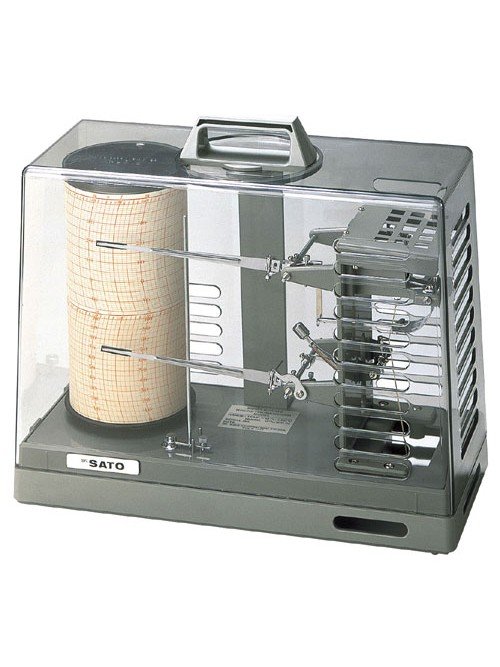
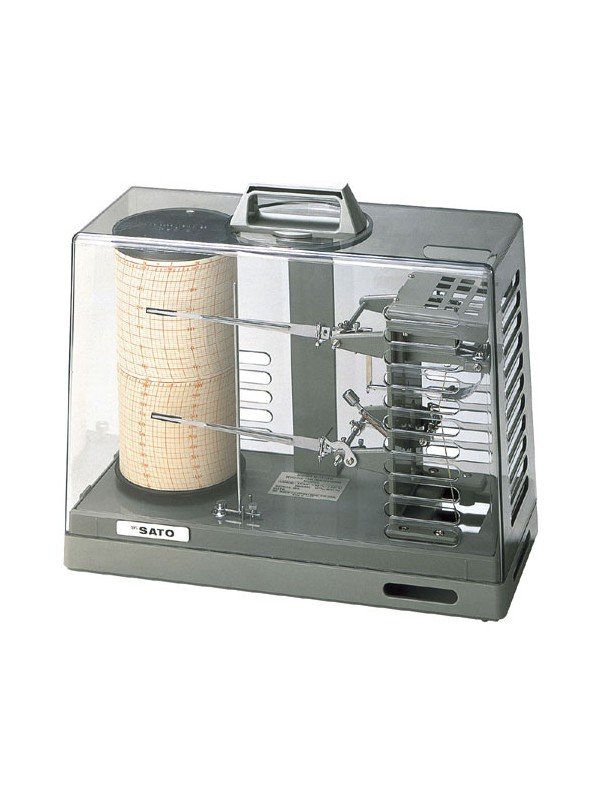
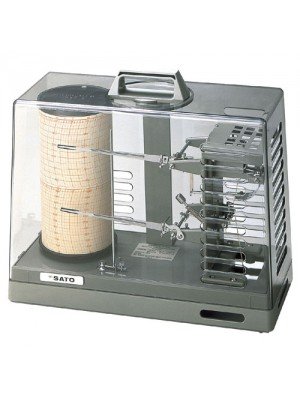
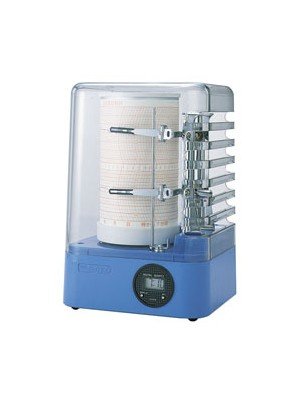
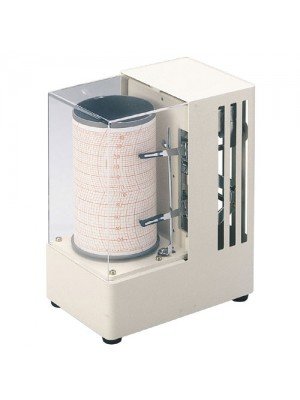
The Sato Thermohygrograph Sigma II NSII-Q continuously records temperature and relative humidity on an easy-to-read paper chart, providing a visible record without requiring a computer or network.
The Sato Sigma II NSII-Q is a current paper thermohygrograph for continuous temperature and relative-humidity recording. Its rotating chart gives staff a visible record without a computer, network or external power supply.
Sato temperature and humidity chart recorder
The Sato Sigma II NSII-Q continuously records temperature and relative humidity using two pens on a rotating cylindrical chart. The record remains visible through the transparent cover, allowing operating staff to recognise excursions and changing conditions during routine inspections.
The recorder works independently of software and network infrastructure. It is suited to warehouses, laboratories, pharmaceutical and medical-product storage, production rooms, archives and other locations that require a straightforward local paper record.
Replacing a discontinued recorder?
The Isuzu TH27R is discontinued. For customers who still require a visible paper record of temperature and humidity, the Sato Sigma II NSII-Q is Seacom's closest current paper-recorder option.
It is not a direct drop-in replacement. Dimensions, temperature ranges, chart periods, chart papers and recording pens differ. Confirm the required measuring range and recording period before selecting the Sato 7210-00 or 7211-00.
| Catalogue number | Temperature range | Humidity range | Typical selection |
|---|---|---|---|
| 7210-00 | −15 to +40 °C | 0 to 100 %RH, non-condensing | General rooms, laboratories, storage areas and cooler environments |
| 7211-00 | −10 to +50 °C | 0 to 100 %RH, non-condensing | Warmer production, storage and equipment areas requiring the higher upper range |
Before ordering: the two models use chart papers with different printed temperature scales. Confirm the recorder catalogue number, temperature range and selected chart period when ordering replacement charts.
| Temperature accuracy | ±1 °C from +10 to +30 °C; ±2 °C elsewhere within the measuring range |
|---|---|
| Humidity accuracy | ±3 %RH from 20 to 95 %RH at +15 to +25 °C; ±5 %RH under other conditions within the range |
| Chart graduation | 1 °C and 1 %RH |
| Temperature sensing element | Aged bimetallic strip |
| Humidity sensing element | Human-hair bundle |
| Chart rotation | Selectable 1 day, 7 days or 32 days |
| Power | Two C-size batteries |
| Typical battery life | Approximately one year when operated continuously in 7-day mode |
| Dimensions | 336 W × 295 H × 148 D mm |
| Weight | Approximately 3.1 kg, excluding batteries |
| Chart period | Best suited to | Operating consideration |
|---|---|---|
| 1 day | Testing, troubleshooting or short production runs | Provides the widest time spacing but requires daily chart replacement |
| 7 days | Routine monitoring of rooms, warehouses and laboratories | A practical balance between chart detail and weekly maintenance |
| 32 days | Long-term condition trending where frequent access is inconvenient | Reduces chart changes but compresses events into a smaller time scale |
The chart speed must match the paper period. After changing the speed switch, fit the corresponding chart and mark its start date, start time, instrument identity and monitoring location.
| Recorder range | 1-day chart | 7-day chart | 32-day chart |
|---|---|---|---|
| 7210-00 −15 to +40 °C / 0 to 100 %RH |
7210-60 | 7210-62 | 7210-64 |
| 7211-00 −10 to +50 °C / 0 to 100 %RH |
7211-60 | 7211-62 | 7211-64 |
| Consumable | Reference | Selection guidance |
|---|---|---|
| Violet cartridge pen | 7210-90 / 7238-04 / 7238-02 | Confirm the current supply format and quantity when ordering |
| Red cartridge pen | 7210-92 / 7238-08 / 7238-06 | Confirm compatibility with the installed recording arm |
| Chart paper | Model- and period-specific | Match both the temperature scale and 1-, 7- or 32-day rotation |
Consumable references and pack quantities can change. When reordering, provide a photograph of the recorder nameplate, the existing chart number and the required recording period.
| Selection point | Sato Sigma II chart recorder | Electronic data logger |
|---|---|---|
| Local visibility | Immediate graphical history visible through the cover | Normally uses a display, software or exported report |
| Infrastructure | No computer, network or external power supply required | May require software, interfaces, gateways or network access |
| Record format | Physical paper charts filed manually | Electronic records with configurable storage and reporting |
| Routine work | Chart and pen replacement plus manual filing | Battery, download, software and data-management procedures |
Choose the Sigma II when a simple, visible paper record is the priority. Consider an electronic logger or central monitoring system when the application requires automated reports, remote alarms, audit trails or data from multiple locations.
Sato Sigma II supplier and product support
Seacom Process Instruments is based in Malaysia and welcomes local and international enquiries for Sato thermohygrographs, chart papers and recording pens. We can help compare the 7210-00 and 7211-00, select the correct recording period and review a move from a discontinued Isuzu TH27R.
For an accurate quotation, include the required temperature range, chart period, quantity, destination country and—when replacing an existing recorder—a photograph of its nameplate and current chart.
Download |

.

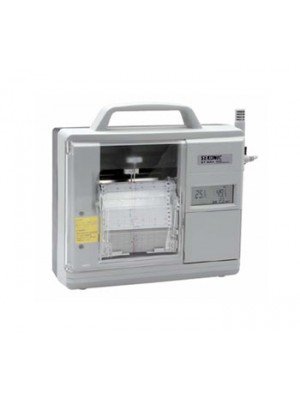
The Sekonic ST-50A displays temperature and relative humidity and records both on a continuous paper chart.
Being phased out: confirm availability before ordering. Alternatives include the Sato Sigma II for paper records, Sato SK-L754 for electronic logging and Vaisala viewLinc for centralised monitoring.
The Sekonic ST-50M digital thermohygrograph is discontinued. It combined temperature and humidity measurement with paper chart recording and SD-card storage.
Contact Seacom to match the replacement to your recording requirements. Features and accessories differ from the original ST-50M.
The Sato Mini-Alpha 7006-00 is a compact thermohygrograph that records temperature and relative humidity on a seven-day paper chart.
.

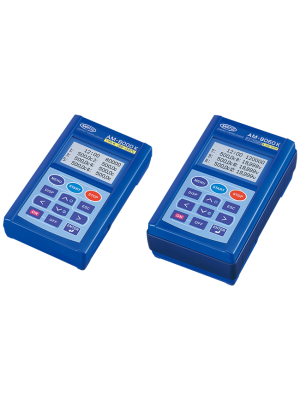
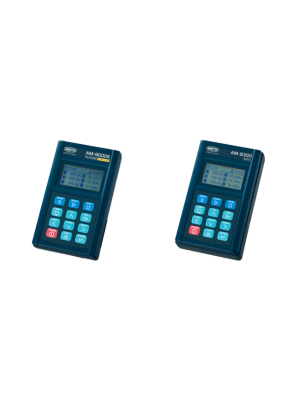
The Anritsu AM-8000 Series is discontinued and has been replaced by the AM-9000 Series.
For a replacement, select the appropriate channel count, thermocouple input configuration and recording interval.

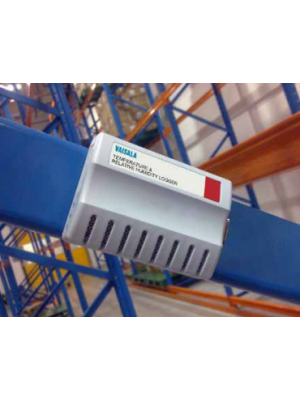
The Vaisala DL2000 combines precision temperature and relative-humidity monitoring with optional analog or door-contact inputs for viewLinc systems.

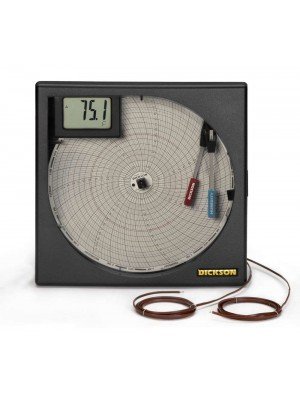
Dickson round chart recorders provide a visible paper record of temperature or temperature and humidity for routine inspection and filing.
Send your existing model number, measurement range and chart reference so we can help identify a suitable configuration.

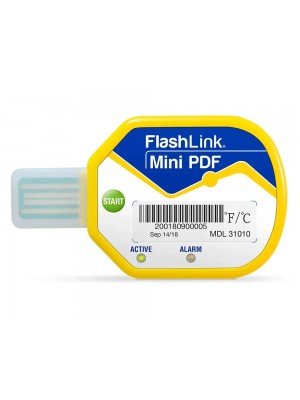
DeltaTrak in-transit temperature loggers and recorders document temperature conditions during shipment.
The Sato Mini-Cube 7008-10 records temperature and relative humidity on a seven-day paper chart for routine inspection and filing.
The Sato Mini-Alpha 7006-00 is a compact thermohygrograph that records temperature and relative humidity on a seven-day paper chart.
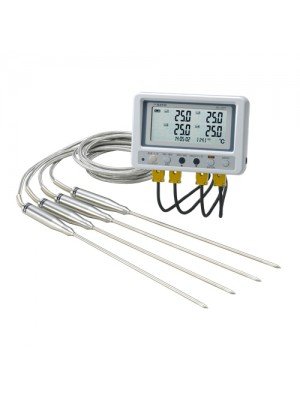
The Sato SK-L400T measures and records temperature from up to four Type K thermocouple probes, with all four readings shown on a large backlit display.
The Sekonic ST-50M digital thermohygrograph is discontinued. It combined temperature and humidity measurement with paper chart recording and SD-card storage.
Contact Seacom to match the replacement to your recording requirements. Features and accessories differ from the original ST-50M.
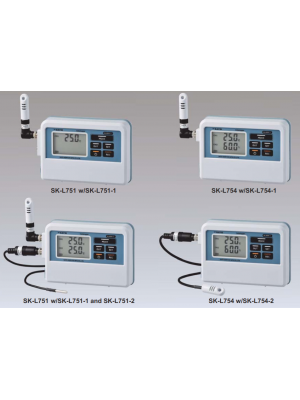
The Sato SK-L750 Series provides portable, configurable recording for temperature or temperature and humidity, with interchangeable probes, local display, USB communication and microSD data transfer.
The Anritsu AM-9000 Series records temperature from six or twelve thermocouple channels in one portable instrument. Choose a fixed thermocouple-type model or a flexible multi-input model for temperature and DC-voltage measurement.
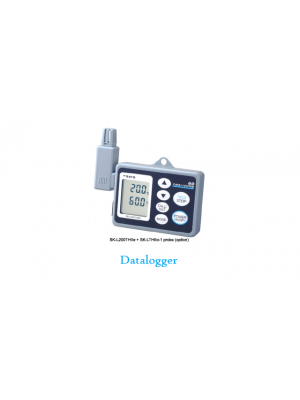
The Sato SK-L200TH II temperature and humidity data logger is discontinued. The replacement is the Sato SK-L754, selected with a compatible temperature and humidity probe.
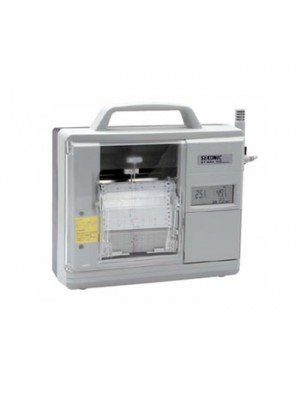
The Sekonic ST-50A displays temperature and relative humidity and records both on a continuous paper chart.
Being phased out: confirm availability before ordering. Alternatives include the Sato Sigma II for paper records, Sato SK-L754 for electronic logging and Vaisala viewLinc for centralised monitoring.
The Sato Thermohygrograph Sigma II NSII-Q continuously records temperature and relative humidity on an easy-to-read paper chart, providing a visible record without requiring a computer or network.
 Sato Thermohygrograph Catalogue
(309.1k)
Sato Thermohygrograph Catalogue
(309.1k)