


.png)








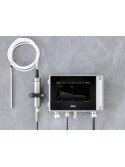
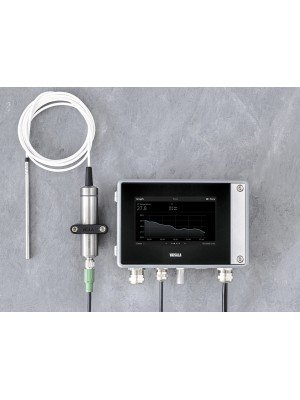
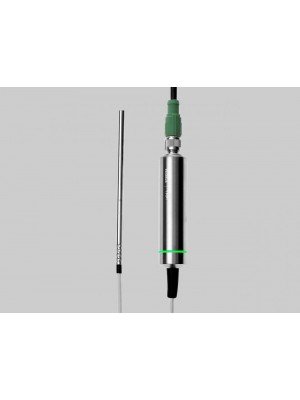
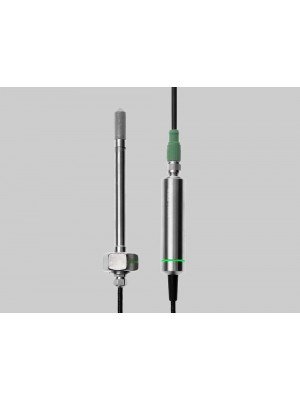
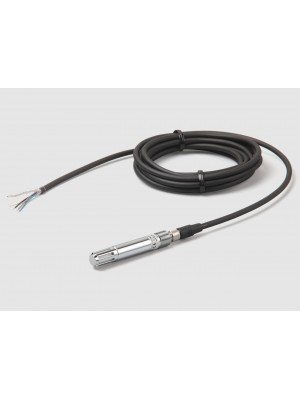
The Vaisala TMP1 is a robust temperature-only probe for demanding industrial processes, pharmaceutical applications and calibration laboratories.
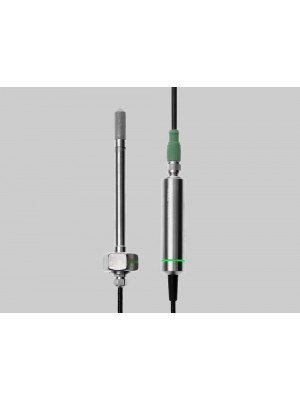
The Vaisala TMP1 is designed for applications where temperature is the primary measurement and accuracy, long-term stability and robust construction are important. Its narrow stainless-steel probe head can be installed in ducts, chambers and process connections across a wide temperature range from −70 to +180 °C.
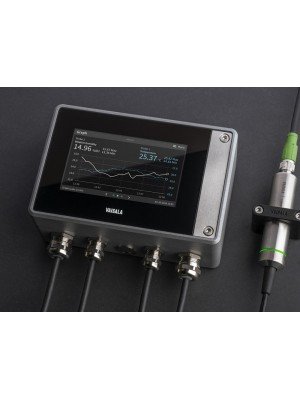
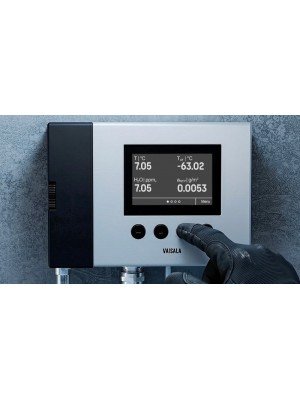
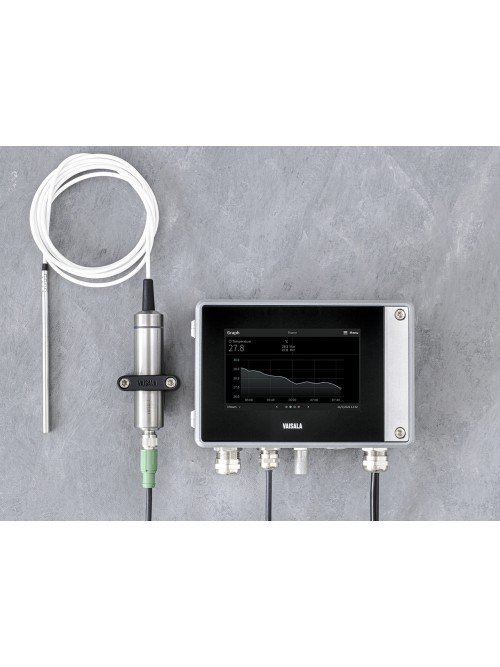
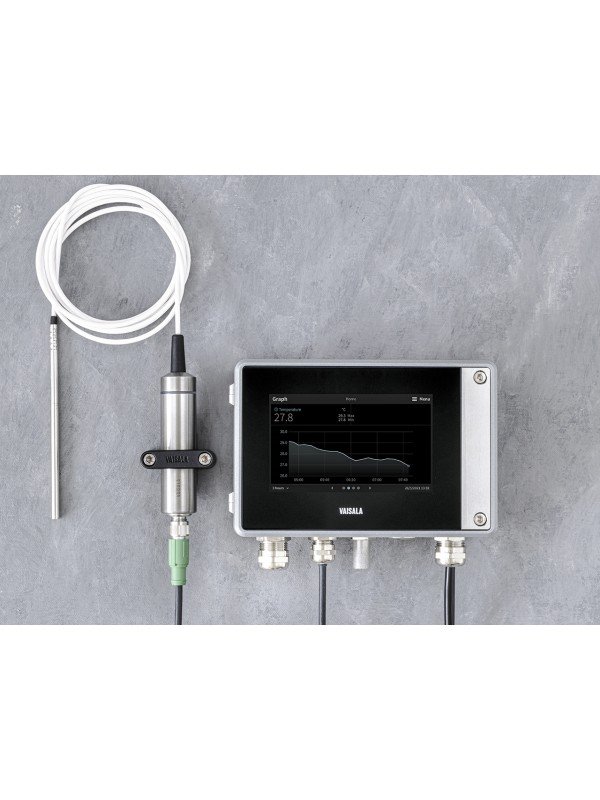
Measurement intelligence is built into the probe body. TMP1 can therefore send temperature data directly to a control system through Modbus RTU or connect to an Indigo transmitter for a local display, analogue outputs, relays and additional digital connectivity.
Temperature-only probe: TMP1 does not measure relative humidity. Choose it when accurate process temperature is required by itself, or pair it with a heated Vaisala HMP7 when true process temperature is needed for humidity measurement in near-condensing conditions.
| Specification | TMP1 performance |
|---|---|
| Measurement range | −70 to +180 °C |
| Temperature sensor | Pt100 RTD Class F0.1 IEC 60751 |
| Accuracy at +23 °C | ±0.1 °C with standard calibration |
| Factory calibration uncertainty at +23 °C | ±0.1 °C, defined as ±2 standard-deviation limits |
| Optional ISO 17025 accuracy at +23 °C | Up to ±0.06 °C, depending on the selected calibration points |
| Optional ISO 17025 calibration uncertainty | ±0.03 °C under the stated calibration conditions |
| Standard certificate | Traceable two-point calibration at +20 and +70 °C |
| Output parameters | Temperature and water-vapour saturation pressure |
| Specification | TMP1 provision |
|---|---|
| Probe-head operating temperature | −70 to +180 °C |
| Probe-body operating temperature | −40 to +80 °C |
| Storage temperature | −40 to +80 °C |
| Probe-body protection | IP66 |
| Probe head and fixed cable protection | IPX8 and IPX9 |
| Probe-head dimensions | Approximately 6 mm diameter × 135 mm |
| Probe and body material | AISI 316L stainless steel |
| Cable jacket | FEP |
| Fixed probe-cable options | 2 or 10 m |
| Weight | Approximately 224 g with 2 m cable |
| Electrical connector | M12 5-pin A-coded male |
| Outdoor use | Suitable with an appropriate installation arrangement |
| Connection method | What it provides | Suitable when |
|---|---|---|
| TMP1 standalone | 15 to 30 VDC supply and non-isolated RS-485 with Modbus RTU | A PLC, data logger or controller can power and communicate directly with the probe |
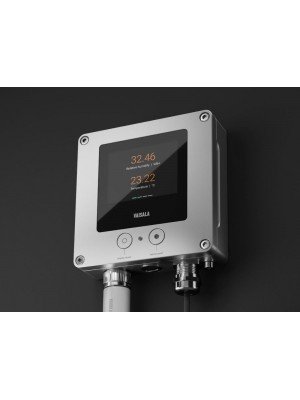
| Indigo200 | Compact local display with model-dependent analogue outputs, relays or Modbus RTU | A practical single-probe transmitter is required |
| Indigo300 | Industrial metal enclosure, display and up to three configurable analogue outputs | A rugged single-probe installation is preferred |
| Indigo510 | One probe, two isolated analogue outputs and Ethernet connectivity | A robust flagship single-probe transmitter is required |
| Indigo520 | Two probe connections, four isolated analogue outputs, two relays and Ethernet connectivity | TMP1 must operate with a second probe or additional system outputs |
| Indigo80 | Portable display, logging, diagnostics, configuration and calibration | Spot checks, field service or portable reference work are required |
| Vaisala Insight | Probe configuration, diagnostics, data viewing and field calibration | A service computer is available at the measurement location |
| Requirement | Recommended starting point | Why it fits |
|---|---|---|
| Temperature only | TMP1 | Avoids adding an unnecessary humidity sensor and provides a wide −70 to +180 °C range |
| Temperature with compact local display | TMP1 with Indigo200 | Adds a local user interface and practical control-system outputs |
| High-accuracy industrial transmitter | TMP1 with Indigo300 or Indigo500 | Adds rugged mounting, display and selectable automation interfaces |
| Portable temperature measurement | TMP1 with Indigo80 | Supports spot checks, logging, diagnostics and field calibration |
| Near-condensing humidity process | TMP1 with HMP7 | TMP1 measures the true process temperature while HMP7 remains heated above the dew point |
| Humidity and temperature up to +180 °C | HMP5 | Use when both humidity and temperature are required in a high-temperature process |
| Dew point and temperature in hot drying | DMP5 | Use when low humidity or dew point is the primary process measurement |
In a high-humidity process, an unheated humidity sensor may approach the dew point and become wet. HMP7 can heat its sensing head above the dew point to reduce condensation risk, but the heated head no longer represents the true process temperature.
A separate TMP1 measures the actual process temperature. The control system can then combine the heated HMP7 moisture measurement with the TMP1 temperature measurement to calculate relative humidity at the real process condition. This arrangement is useful in drying chambers, humid processes and other locations where condensation prevention and accurate RH calculation are both important.
| Installation | Typical accessory or method | Selection consideration |
|---|---|---|
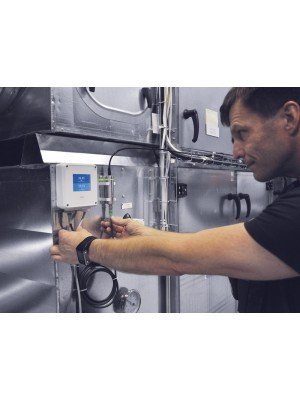
| Duct or chamber | Duct installation kit for temperature probe | Confirm insertion depth, air leakage control and service access |
| Pressure-tight process connection | Swagelok fitting for 6 mm probe with ISO 1/8 or NPT 1/8 thread | Verify process pressure, fitting compatibility and approved installation practice |
| Outdoor air measurement | DTR502B solar-radiation shield | Protect the probe from direct solar heating and precipitation |
| Remote transmitter | Fixed probe cable plus compatible Indigo extension cable | Total distance between probe and transmitter can be extended up to 30 m |
| Portable measurement | TMP1 connected to Indigo80 | Protect the cable and allow the probe to stabilise before recording the result |
| Application | Measurement purpose | Important consideration |
|---|---|---|
| Pharmaceutical production | Accurate process or chamber temperature monitoring | Define calibration points around the actual operating range |
| Calibration laboratories | Reference monitoring and comparison work | Consider optional ISO 17025 calibration and required uncertainty |
| Environmental and test chambers | Monitor chamber temperature across wide operating conditions | Position the probe at the representative control or validation location |
| Industrial drying | Measure process-air or product-zone temperature | Select TMP1 alone or combine it with a humidity or dew-point probe |
| Cold storage and freezers | Monitor low-temperature environments down to −70 °C | Route the cable to minimise door leakage and mechanical damage |
| High-humidity processes | Supply true process temperature for an HMP7 heated-probe calculation | Ensure both probes represent the same process condition |
| Outdoor measurement | Measure ambient temperature | Use an appropriate radiation shield and mounting location |
TMP1 is supplied with a traceable two-point calibration certificate at +20 and +70 °C. Applications operating far from these temperatures, or those with demanding uncertainty requirements, should select calibration points that represent the actual working range.
An optional ISO 17025 calibration can improve the stated performance within the calibrated region. The required calibration interval depends on process criticality, operating temperature, contamination exposure and the site's quality system. Vaisala activates a 12-month calibration reminder by default, but the final interval should be based on measurement history and risk.
Seacom Process Instruments supplies and supports the Vaisala TMP1 Temperature Probe in Malaysia for pharmaceutical processes, calibration laboratories, environmental chambers, industrial drying, cold storage and demanding temperature measurement applications.
Our team can assist with probe mounting, cable length, Indigo transmitter selection, Modbus or analogue integration, HMP7 pairing, commissioning and traceable or ISO 17025 calibration planning.
Need help selecting the right configuration? Send Seacom the temperature range, process or chamber type, mounting connection, cable length, required outputs and calibration points. We will help check the suitable TMP1 and Indigo arrangement.
Download |

.
The Vaisala Indigo500 Series provides flagship industrial measurement integration: choose Indigo510 for a simplified single-probe system or Indigo520 for full dual-probe capability.
The Vaisala Indigo200 Series is the standard transmitter platform for one interchangeable Indigo-compatible smart probe, providing local display and practical automation-system connectivity.
.
The Vaisala Indigo300 is a rugged industrial transmitter for one Vaisala Indigo-compatible smart probe, providing local measurement display and up to three configurable analog outputs.
Its corrosion-resistant IP66 metal enclosure, flexible probe mounting and interchangeable probe design make Indigo300 suitable for humidity, temperature, dew point, CO2, moisture in oil and other demanding industrial measurements.
The Vaisala HMP4 provides high-accuracy humidity and temperature measurement in compressed air, breathing air, industrial gases, vacuum systems and other processes operating at pressures up to 100 bar.
The Vaisala HMP5 provides high-accuracy humidity and temperature measurement in ovens, dryers, kilns and other processes operating at temperatures up to +180 °C.

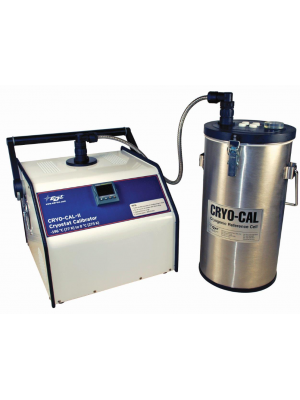
The EDL CRYO-CAL-2-LI uses liquid nitrogen cooling for comparison calibration of compatible temperature sensors.

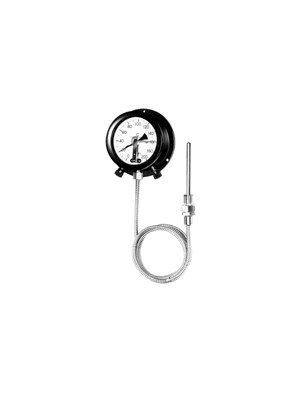
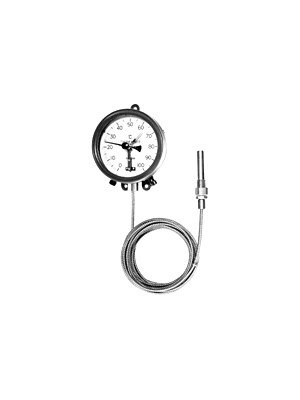
The Hyoda M Series provides remote temperature indication through a sensing bulb and capillary tube.
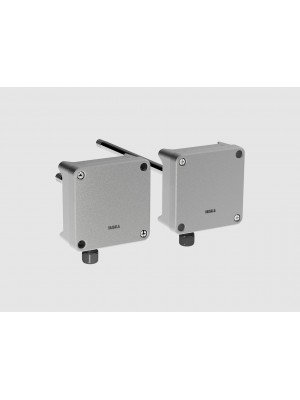
The Vaisala HMD60 Series provides high-accuracy humidity and temperature measurement for demanding HVAC ducts and light-industrial applications.
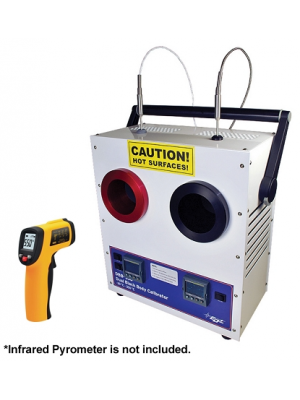
The EDL DBB Series combines hot and cold black body targets for checking compatible infrared thermometers and pyrometers.
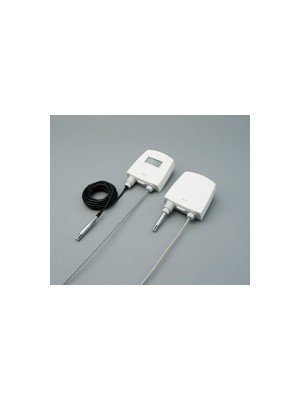
The Vaisala HMT120 and HMT130 provide accurate, stable humidity and temperature measurement for cleanrooms, laboratories, data centres and demanding HVAC applications.
Product transition: HMT120/HMT130 are expected to be phased out. For new projects, the Vaisala Origo10 is the recommended replacement platform.
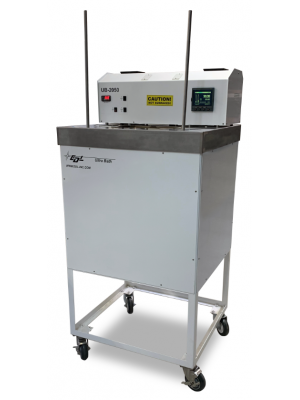
The EDL Ultra Bath UB Series provides stirred baths for comparison calibration of immersion thermometers and temperature probes.
The Hyoda S6 is a fluid-filled thermometer with a 150 mm dial and remote sensing bulb connected by capillary tube.
The Vaisala HMT370EX provides intrinsically safe humidity and temperature measurement with HMP-series probes. The new DMP370 configuration combines the HMT370EX transmitter with a DMP37X DRYCAP® probe for low-dew-point measurement in hazardous locations.
DMP370 availability: Vaisala plans first deliveries for Q1 2027. Contact Seacom for configuration and project lead time.
The Vaisala HMP110 is a high-accuracy humidity and temperature probe designed for demanding equipment integration, environmental chambers, data loggers, incubators and controlled-environment applications.
It provides ±1.5% RH accuracy, a 0–100% RH range, −40 °C to +80 °C temperature measurement, a chemically resistant HUMICAP 180R sensor and analog or Modbus RTU output options.
The Vaisala TMP1 is a robust temperature-only probe for demanding industrial processes, pharmaceutical applications and calibration laboratories.
 TMP1 catalogue
(662.66k)
TMP1 catalogue
(662.66k)