


.png)








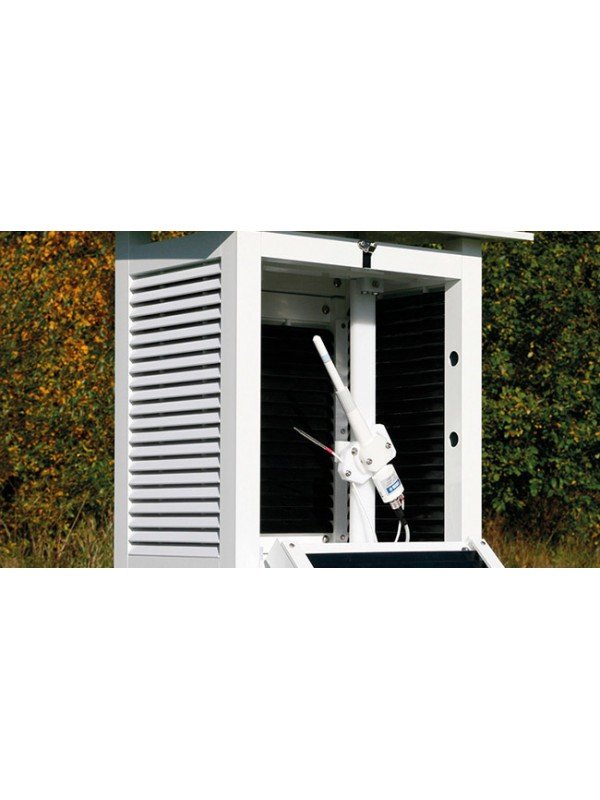
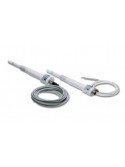
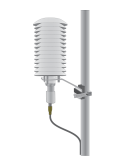
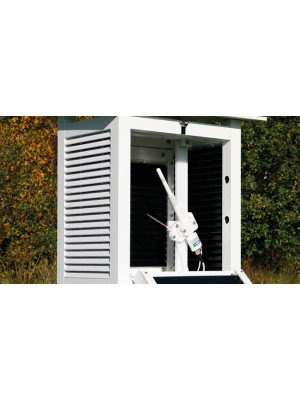
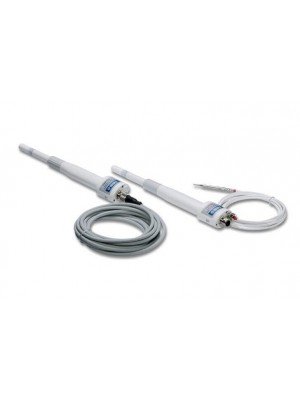
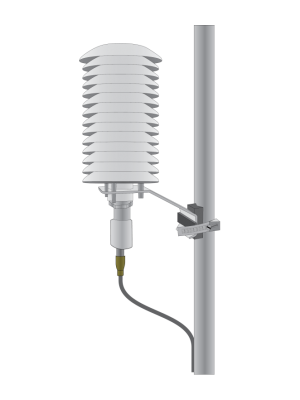
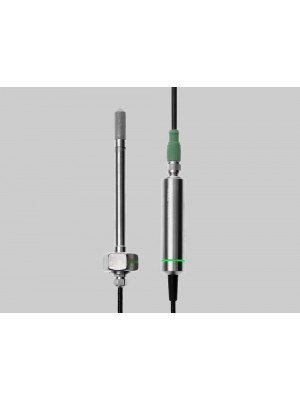
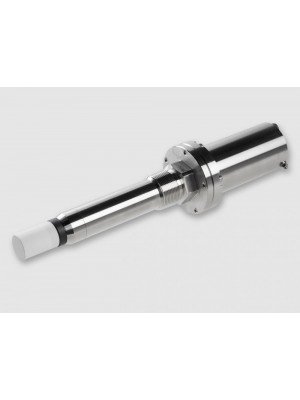
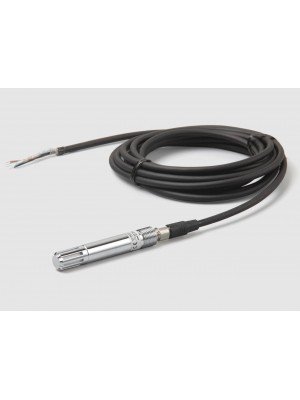
The Vaisala HMP155 provides stable humidity and temperature measurement for automatic weather stations, road-weather systems, airports, research sites and demanding outdoor monitoring.
The Vaisala HUMICAP® HMP155 is designed for accurate and stable outdoor humidity and temperature measurement. Its weather-resistant probe construction, protective filter options and long-term measurement stability make it suitable for professional meteorology and other exposed environmental-monitoring locations.
Typical installations include automatic weather stations, airport observation systems, road-weather stations, agricultural research, hydrology sites, environmental-monitoring networks and industrial locations requiring meteorological-grade outdoor measurements.
| Model | Humidity output | Temperature output | Recommended use |
|---|---|---|---|
| HMP155A | Analogue voltage | Analogue voltage | Data loggers and weather stations requiring two active voltage signals |
| HMP155D | Analogue voltage | Passive four-wire Pt100 | Systems that read RH as voltage and temperature directly from a precision resistance input |
| HMP155E | RS-485 digital | RS-485 digital | Digital data-acquisition systems requiring serial measurement data |
Selection point: all HMP155 models have an RS-485 interface for service use, but HMP155E is the model intended to provide RS-485 as its measurement output. Select the complete model and output configuration according to the receiving data logger or weather-station controller.
| Measurement specification | Performance |
|---|---|
| Relative-humidity range | 0 to 100 %RH |
| RH accuracy at +15 to +25 °C | ±1 %RH from 0 to 90 %RH; ±1.7 %RH from 90 to 100 %RH |
| Factory-calibration uncertainty at +20 °C | ±0.6 %RH from 0 to 40 %RH; ±1.0 %RH from 40 to 95 %RH |
| Humidity sensor | HUMICAP® R2, HUMICAP® 180R or configuration-dependent equivalent; composite versions for purge or warming |
| Temperature observation range | −80 to +60 °C |
| Temperature sensor | Pt100 RTD, Class F0.1 according to IEC 60751 |
| Operating voltage | 7 to 28 V DC; required minimum depends on output and heating options |
| Ingress protection | IP66 |
| Probe dimensions | Approximately 279 × 40 mm |
Fog, rain, heavy dew and near-saturated air can wet an unheated humidity sensor and temporarily prevent it from representing the surrounding atmosphere. The optional warmed-probe function keeps the sensor head above the ambient dew-point temperature, reducing the risk of condensation on the sensing element.
Because warming changes the temperature at the humidity sensor, accurate ambient relative humidity is calculated using a separate temperature measurement. Select the warmed-probe and additional-temperature-sensor arrangement together rather than treating probe heating as an independent accessory.
Optional chemical purge periodically heats the humidity sensor to reduce the effect of certain chemical contaminants. This is useful where long-term stability may be challenged by airborne chemicals, but it does not replace correct siting, filter selection, inspection or calibration.
A sintered PTFE filter provides strong protection against water, dust and dirt. A membrane filter can provide faster response where the application and exposure conditions allow it. Filter condition should be checked during scheduled weather-station maintenance.
| Installation option | Purpose | Selection guidance |
|---|---|---|
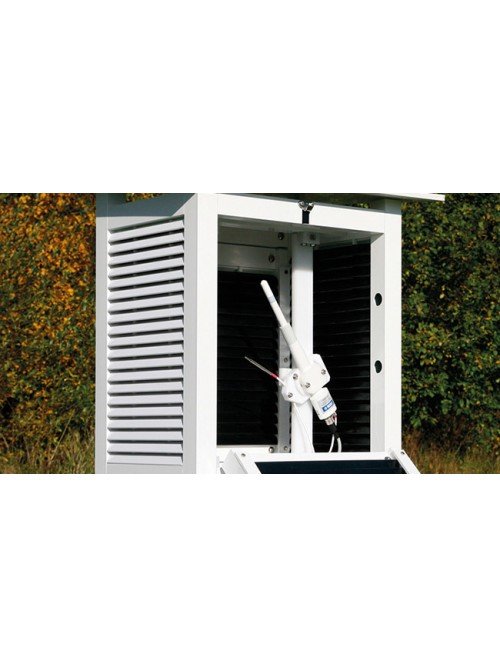
| DTR503 | Natural-aspiration radiation shield for HMP155 installations | Common choice for automatic weather stations and exposed monitoring sites |
| DTR13 | Compact radiation shield for compatible probe installations | Use where its mounting arrangement and measurement requirements are suitable |
| Stevenson screen | Traditional naturally ventilated instrument enclosure | Suitable where the observation standard or existing station design requires it |
| DTR502 with additional-temperature-probe kit | Shielding of the separate temperature sensor | Used with applicable warmed-probe configurations requiring independent ambient temperature |
Radiation shielding is essential for representative outdoor temperature and humidity measurement. The shield must protect the sensor from precipitation and direct or reflected solar radiation while allowing sufficient airflow around the probe.
| Selection point | HMP155 | Industrial HMP probe |
|---|---|---|
| Primary role | Meteorological and exposed outdoor measurement | Industrial process, duct, chamber or pipeline measurement |
| Typical installation | Radiation shield, weather station or environmental-monitoring mast | Process fitting, duct kit, chamber or Indigo transmitter |
| Temperature environment | Outdoor operation down to −80 °C, up to +60 °C | Application-dependent probes covering general, high-temperature, high-humidity and pressurised processes |
| Outputs | Voltage, passive Pt100 or RS-485 according to HMP155 model | Standalone Modbus RTU or connection to an Indigo transmitter, depending on probe |
| High-humidity strategy | Optional warmed probe with additional ambient-temperature measurement | Vaisala HMP7 for continuously humid industrial processes |
Seacom Process Instruments supplies and supports the Vaisala HMP155 meteorological humidity and temperature probe in Malaysia for automatic weather stations, airports, road-weather systems, research sites, plantations and environmental-monitoring networks.
Our team can assist with choosing HMP155A, HMP155D or HMP155E, selecting warmed-probe and chemical-purge options, matching the radiation shield, reviewing power and output requirements, planning installation and arranging calibration.
Contact Seacom with your temperature and humidity range, required output, data-logger input, site exposure, shield preference, cable length and calibration requirements so we can recommend a suitable HMP155 configuration.
Download |

.
The Vaisala HMP4 provides high-accuracy humidity and temperature measurement in compressed air, breathing air, industrial gases, vacuum systems and other processes operating at pressures up to 100 bar.
The Vaisala Indigo500 Series provides flagship industrial measurement integration: choose Indigo510 for a simplified single-probe system or Indigo520 for full dual-probe capability.
The Vaisala HMW90 Series provides high-accuracy humidity and temperature measurement for demanding indoor HVAC and controlled-environment applications.
The Vaisala XMW85 Series provides reliable indoor CO2, humidity and temperature measurement for demand-controlled ventilation, smart buildings and indoor air-quality monitoring.
All models support Modbus RTU over RS-485, with two-in-one and three-in-one measurement configurations and optional metric or non-metric displays.
The Vaisala HMP1 is a high-accuracy, interchangeable humidity and temperature probe for indoor spaces. It connects directly to an Indigo200 or Indigo300 transmitter to create a compact wall-mounted measurement system.
The Vaisala PTU300 combined barometric pressure, relative humidity and temperature in one transmitter. The series is discontinued and has been replaced by a suitable Indigo520 barometric-pressure configuration with an application-specific HMP probe.
The Vaisala HMM105 provides reliable humidity measurement for integration into environmental chambers, incubators and OEM equipment.
The Vaisala HMD60 Series provides high-accuracy humidity and temperature measurement for demanding HVAC ducts and light-industrial applications.
The Vaisala MGP261 measures methane, carbon dioxide and humidity directly in raw biogas. Its in-situ design avoids a separate sampling system and helps operators monitor gas quality while protecting downstream equipment.
The Vaisala HMP60 is a compact, durable and cost-effective humidity and temperature probe for equipment integration, data loggers, incubators, glove boxes, greenhouses and environmental monitoring systems.
It provides 0–100% RH and −40 °C to +60 °C measurement ranges, low power consumption, interchangeable Vaisala INTERCAP sensor and optional Modbus RTU communication.
The Vaisala HMP3 is a high-accuracy, field-maintainable probe for industrial HVAC, air-handling units, cleanrooms, paint booths and environmental chambers.
The Vaisala HMT370EX provides intrinsically safe humidity and temperature measurement with HMP-series probes. The new DMP370 configuration combines the HMT370EX transmitter with a DMP37X DRYCAP® probe for low-dew-point measurement in hazardous locations.
DMP370 availability: Vaisala plans first deliveries for Q1 2027. Contact Seacom for configuration and project lead time.
The Vaisala HMP155 provides stable humidity and temperature measurement for automatic weather stations, road-weather systems, airports, research sites and demanding outdoor monitoring.
 HMP155 catalogue
(697.08k)
HMP155 catalogue
(697.08k)