


.png)








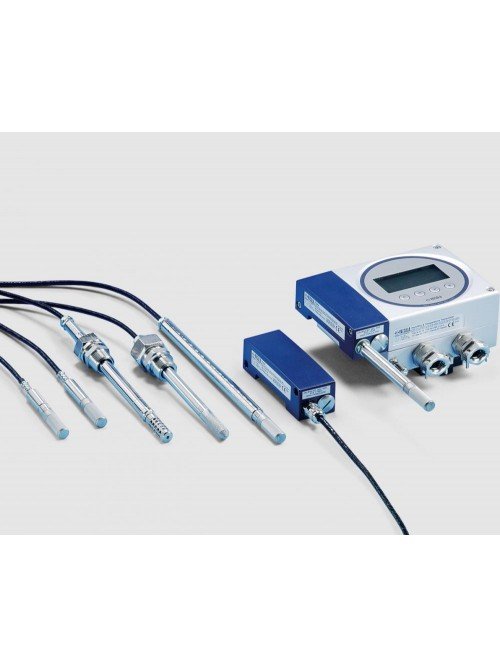
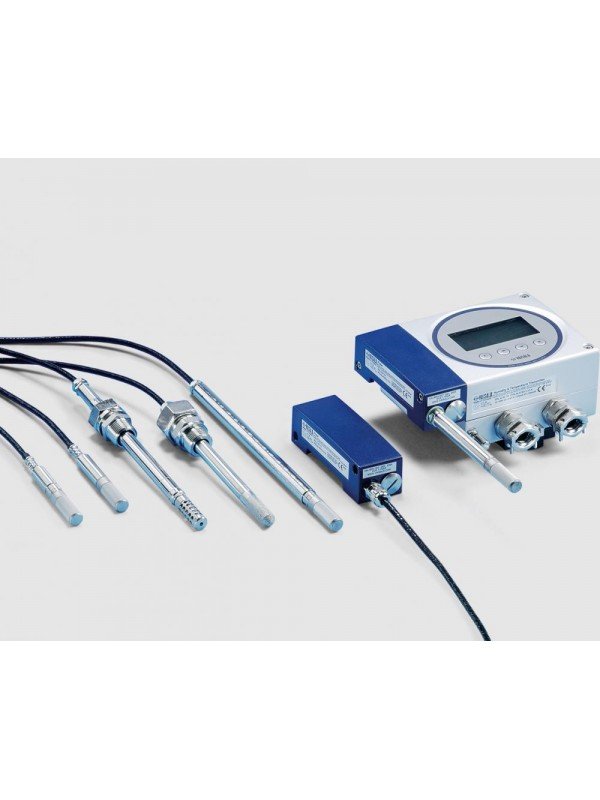
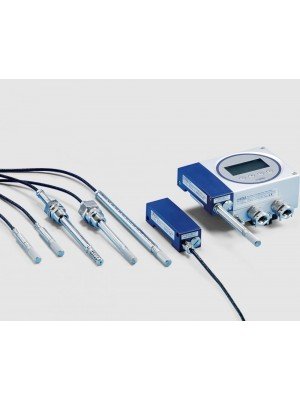
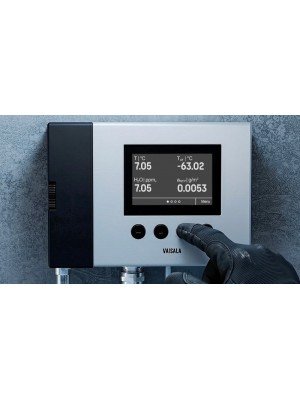
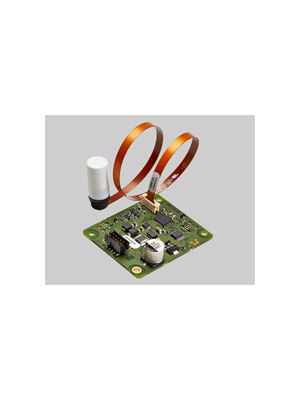
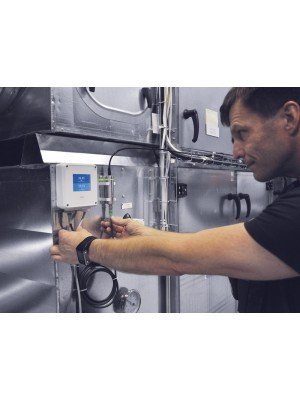
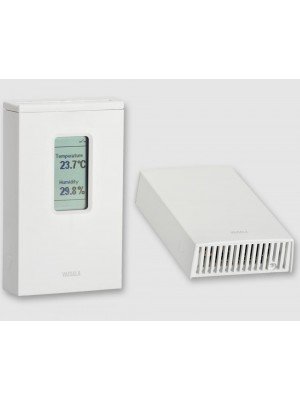
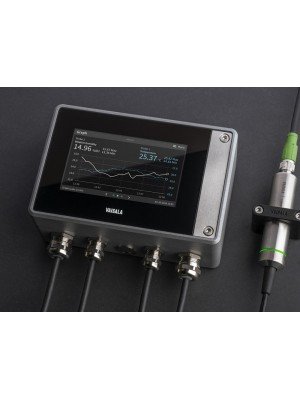
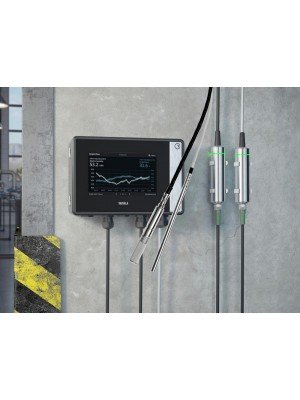
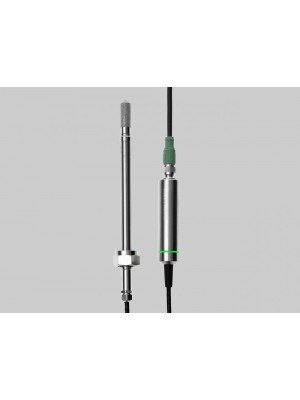
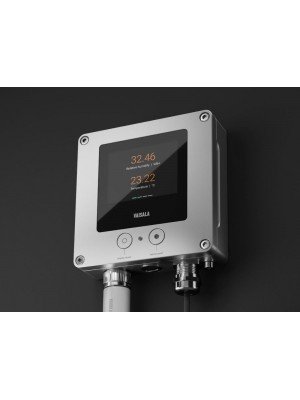
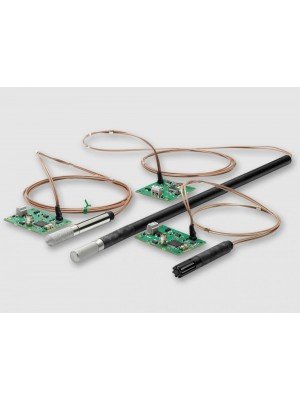
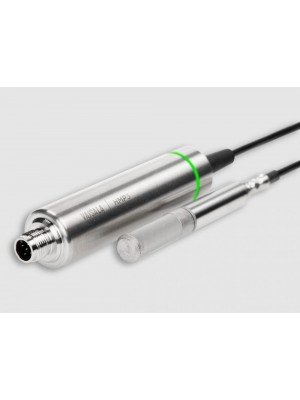
The Vaisala HMT360 Series was an intrinsically safe transmitter platform for humidity, temperature and moisture measurement in hazardous areas. It is discontinued and replaced by the Vaisala HMT370EX with an application-specific probe.
Product status: The Vaisala HMT360 Series is discontinued. For new hazardous-area installations and planned migrations, use the Vaisala HMT370EX intrinsically safe transmitter with the probe and regional certification selected for the application.
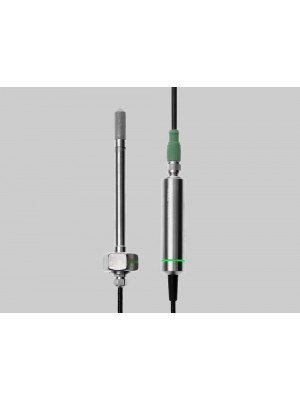
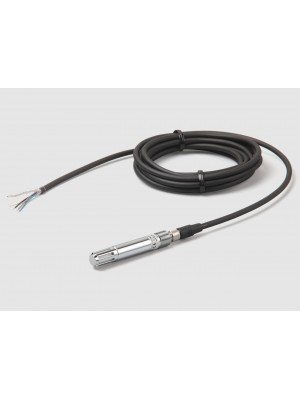
The Vaisala HMT360 Series provided intrinsically safe humidity and temperature measurement for potentially explosive gas and dust environments. Different probe versions supported wall mounting, confined spaces, high pressure, vacuum, high temperature, high humidity and pressurised pipelines.
Configuration-dependent versions also measured moisture in industrial oil, JET A-1 fuel and natural gas. The transmitter used two-wire 4–20 mA measurement channels through an approved intrinsic-safety interface, with service communication used for configuration and calibration.
| Legacy model | Original application | Current HMT370EX probe | Migration note |
|---|---|---|---|
| HMT361 | Wall-mounted ambient measurement | HMP371 | Fixed probe for wall or enclosure installation |
| HMT363 | Ducts, channels and confined spaces | HMP373 | Check probe cable material, insertion depth and temperature class |
| HMT364 | High-pressure processes and vacuum | HMP374 | Confirm process pressure, fitting and safe isolation arrangement |
| HMT365 | High-temperature processes | HMP375 | Check probe-head temperature against the required Ex temperature class |
| HMT367 | Continuous high humidity and demanding wet conditions | HMP377 | Review probe heating and external temperature compensation requirements |
| HMT368 | Pressurised pipelines | HMP378 | Confirm insertion depth, fitting body and ball-valve arrangement |
Explore the Vaisala HMT370EX replacement platform
| Legacy configuration | Original medium or use | Current starting point | Important requirement |
|---|---|---|---|
| HMT368F / HMT360F | Moisture in industrial oil | HMT370EX with HMP378F | Confirm oil type, water-solubility coefficients, process fitting and certification |
| HMT368H / HMT360H | Moisture in JET A-1 fuel | HMT370EX with HMP378H | Confirm aviation-fuel application, installation and applicable approval |
| HMT362N | Natural gas with a flanged probe arrangement | Application review required | Do not assume a current standard probe duplicates the legacy flange and certification |
| HMT364N | High-pressure natural gas | HMT370EX with HMP374 as the technical starting point | Gas compatibility, pressure, process sealing and hazardous-area approval must be confirmed |
| HMT368N | Natural-gas pipeline installation | HMT370EX with HMP378 as the technical starting point | Confirm gas service, pipeline pressure, insertion method, fitting and certification |
Special-medium warning: a similar probe shape or pressure rating does not by itself approve a replacement for natural gas, oil or aviation fuel. The measured medium, complete Ex marking, sealing materials, pressure boundary and regional certification must be reviewed for the exact ordered configuration.
| Comparison point | HMT360 Series | HMT370EX Series |
|---|---|---|
| Product status | Discontinued | Current replacement platform |
| Safety concept | Intrinsically safe legacy transmitter | Current intrinsically safe Ex i transmitter |
| Probe options | HMT361, HMT363, HMT364, HMT365, HMT367 and HMT368 variants | Interchangeable HMP371, HMP373, HMP374, HMP375, HMP377 and HMP378 probes |
| Special moisture versions | Oil, JET A-1 and selected natural-gas configurations | HMP378F for oil and HMP378H for JET A-1; natural gas requires application review |
| Relative-humidity range | 0 to 100 %RH | 0 to 100 %RH within model and dew-point limitations |
| Best stated RH accuracy | Up to ±1.0 %RH at +20 °C | Up to ±0.8 %RH at +23 °C |
| Temperature measurement | Probe-dependent, up to −70 to +180 °C | Probe- and certification-dependent, up to −70 to +180 °C |
| Analogue outputs | Two-wire 4–20 mA, configuration-dependent | Two configurable two-wire 4–20 mA channels |
| Probe servicing | Legacy removable-probe arrangement | Interchangeable smart probes with independent calibration |
| Ingress protection | IP65 legacy enclosure | Up to IP66 with the probe connected; configuration-dependent |
Replacing an intrinsically safe transmitter requires more than matching the measured parameter. Review the complete electrical and mechanical installation before changing the device.
The maximum measuring range of a probe is not automatically the permitted temperature in every hazardous-area installation. The allowed temperature depends on the probe model, cable material, gas or dust classification and required Ex temperature class.
| Example temperature class | Published upper probe-head limit for applicable configurations | Selection guidance |
|---|---|---|
| T6 | Approximately +55 °C | Use the exact limit stated in the regional safety guide and ordered configuration |
| T5 | Approximately +100 °C | Applicable probe and cable configuration must be confirmed |
| T4 | Up to approximately +135 °C for applicable remote probes | Do not use the general probe range as the certified limit |
| T3 | Up to +180 °C for applicable probe configurations | Confirm the complete Ex approval, ambient conditions and installation method |
A functioning HMT360 does not need to be removed solely because the series is discontinued. Keep the transmitter label, probe model, barrier information, control drawing, wiring diagram, calibration certificates and configuration records while the installation remains in service.
For a critical hazardous-area measurement, check calibration and repair availability and plan migration before a failure creates an extended process interruption. Any service work must preserve the approved intrinsic-safety installation and be carried out by suitably competent personnel.
Seacom Process Instruments supports existing Vaisala HMT360 intrinsically safe transmitters in Malaysia and supplies the current HMT370EX platform for chemical production, pharmaceuticals, paint booths, powder handling, fuel storage, oil and gas processes and other hazardous areas.
Our team can assist with identifying the legacy probe, selecting the HMT370EX configuration, reviewing process fittings and pressure limits, mapping 4–20 mA outputs, coordinating safety barriers, commissioning and calibration planning.
Contact Seacom with the complete HMT360 model code, nameplate photographs, hazardous-area classification, measured medium, process temperature and pressure, existing barrier details and required outputs so we can review a suitable migration arrangement.
Download |

.
The Vaisala HMT370EX provides intrinsically safe humidity and temperature measurement with HMP-series probes. The new DMP370 configuration combines the HMT370EX transmitter with a DMP37X DRYCAP® probe for low-dew-point measurement in hazardous locations.
DMP370 availability: Vaisala plans first deliveries for Q1 2027. Contact Seacom for configuration and project lead time.
.
The Vaisala HMM105 provides reliable humidity measurement for integration into environmental chambers, incubators and OEM equipment.
The Vaisala Indigo200 Series is the standard transmitter platform for one interchangeable Indigo-compatible smart probe, providing local display and practical automation-system connectivity.
The Vaisala HMW90 Series provides high-accuracy humidity and temperature measurement for demanding indoor HVAC and controlled-environment applications.
The Vaisala Indigo500 Series provides flagship industrial measurement integration: choose Indigo510 for a simplified single-probe system or Indigo520 for full dual-probe capability.
The Vaisala HMP4 provides high-accuracy humidity and temperature measurement in compressed air, breathing air, industrial gases, vacuum systems and other processes operating at pressures up to 100 bar.
The Vaisala HMP110 is a high-accuracy humidity and temperature probe designed for demanding equipment integration, environmental chambers, data loggers, incubators and controlled-environment applications.
It provides ±1.5% RH accuracy, a 0–100% RH range, −40 °C to +80 °C temperature measurement, a chemically resistant HUMICAP 180R sensor and analog or Modbus RTU output options.
The Vaisala HMP7 is designed for continuously humid, rapidly changing and near-condensing environments. Probe heating helps prevent condensation while maintaining reliable process measurement.
The Vaisala HMP8 provides high-accuracy humidity and temperature measurement in compressed air, refrigerant dryers and pressurised industrial processes up to 40 bar.
The Vaisala Indigo300 is a rugged industrial transmitter for one Vaisala Indigo-compatible smart probe, providing local measurement display and up to three configurable analog outputs.
Its corrosion-resistant IP66 metal enclosure, flexible probe mounting and interchangeable probe design make Indigo300 suitable for humidity, temperature, dew point, CO2, moisture in oil and other demanding industrial measurements.
The Vaisala HMM100 provides reliable humidity measurement and a configurable analog output for integration into environmental chambers and OEM equipment.
The Vaisala HMP3 is a high-accuracy, field-maintainable probe for industrial HVAC, air-handling units, cleanrooms, paint booths and environmental chambers.
The Vaisala HMX110 Series provides accurate humidity and temperature measurement for demanding indoor, duct and outdoor HVAC applications.
The Vaisala HMT360 Series was an intrinsically safe transmitter platform for humidity, temperature and moisture measurement in hazardous areas. It is discontinued and replaced by the Vaisala HMT370EX with an application-specific probe.
 HMT370EX catalogue
(999.79k)
HMT370EX catalogue
(999.79k)