- Out-of-Stock
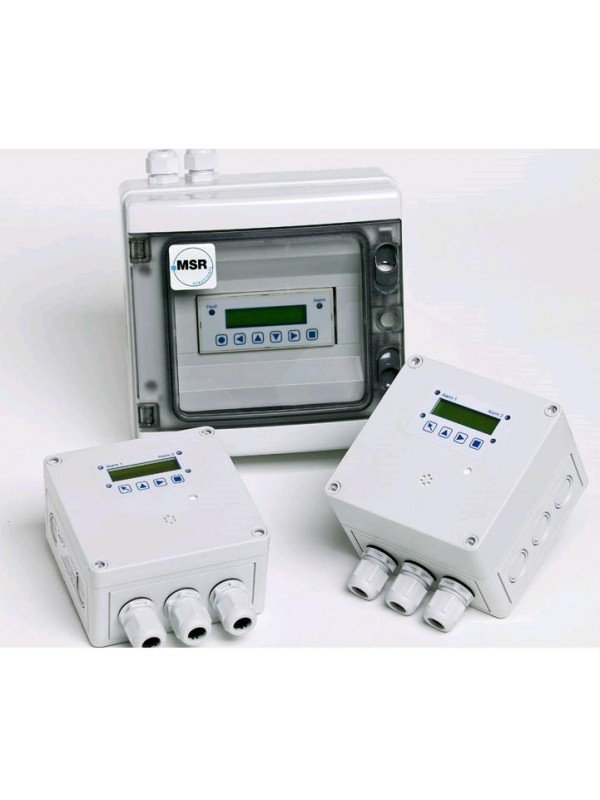
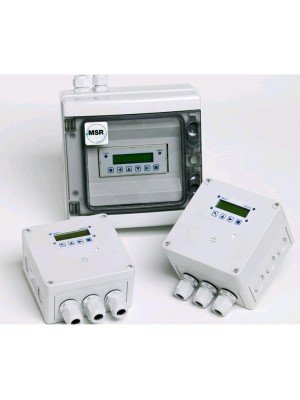



MSR gas detection systems continuously monitor combustible, toxic and refrigerant gases, generate local or central alarms and interface with ventilation, shutdown and building-management systems.
An effective fixed gas-detection system is more than a collection of sensors. Each measuring point must detect the correct gas at a representative location, communicate reliably with the controller and trigger a clearly defined response when a warning, alarm or instrument fault occurs.
MSR provides modular detectors, sensor boards, compact controllers, networked controllers, entrance displays and hazardous-area devices. The system can be configured for a small plant room or expanded across a larger facility with multiple gases, alarm zones and control outputs.
Application-specific design: the target gas, measuring range, sensor technology, detector position, alarm thresholds and response sequence must be selected from the site risk assessment. One detector configuration cannot be used for every gas or location.
| System layer | Function | Typical components |
|---|---|---|
| Gas sensing | Measures the selected combustible, toxic, oxygen or refrigerant gas | Gas-specific digital or analogue sensor |
| Local processing | Converts, compensates and supervises the sensor measurement | Detector electronics, Sensor-Board SB or Warning and Sensor Board WSB |
| Control | Displays values, evaluates alarm levels and supervises system faults | Multi-Sensor Controller MSC or Digital Gas Controller DGC |
| Warning | Alerts personnel before entry or during an abnormal gas condition | Door Entrance Module, beacon, sounder or warning sign |
| Automatic response | Starts ventilation or initiates a defined shutdown or isolation action | Controller relays, remote I/O or PLC interface |
| Supervision | Transfers measurements, alarms and faults to another system | Modbus, RS-485, analogue output or network interface |
| System requirement | Recommended starting point | Why it fits |
|---|---|---|
| Compact system with up to three sensors | Multi-Sensor Controller MSC | Compact controller with three power relays, Modbus and analogue output; display and UPS are available options |
| Local sensing and warning functions | Warning and Sensor Board WSB | Connects up to three sensors, with optional display, two relays, Modbus and analogue output |
| Distributed sensor points | Sensor-Board SB with compatible controller | Provides measured values from up to three digital sensors to the controller or higher-level BMS |
| Large networked system | Digital Gas Controller DGC | Supports system configurations with up to 128 sensors and control of up to 32 relays |
| Warning outside a monitored room | Door Entrance Module DEM or DEM-IO | Provides alarm and safe-status indication at entrances to monitored areas |
| Hazardous-area gas detection | PolyXeta PX or PolyXeta2 PX | Platform intended for certified Zone 1 and Zone 2 applications with appropriate signal and alarm options |
| Application | Typical gas concern | Design focus |
|---|---|---|
| Refrigeration and chiller rooms | Application-specific refrigerant gas | Leak sources, refrigerant density, pits, ventilation and plant shutdown logic |
| Parking and vehicle facilities | Carbon monoxide, nitrogen dioxide or application-specific gases | Traffic patterns, ventilation control, alarm zoning and local regulations |
| Laboratories | Oxygen deficiency or enrichment, toxic gases and process gases | Cylinder storage, benches, extraction, room entry warning and emergency response |
| Boiler and heating rooms | Combustible gas and carbon monoxide | Fuel train, combustion equipment, ventilation and fuel-isolation sequence |
| Battery and energy facilities | Hydrogen or other technology-specific gases | Charging conditions, ceiling spaces, ventilation and hazardous-area review |
| Industrial process areas | Combustible, toxic or asphyxiant gases | Release scenarios, classified areas, process interlocks and detector survivability |
| Beverage and fermentation facilities | Carbon dioxide and oxygen-deficiency risk | Low areas, tanks, process vents, room access and personnel warning |
| Selection point | Small local system | Networked multi-zone system |
|---|---|---|
| Measuring points | One to three sensors | Multiple rooms, zones or gas types |
| Controller | MSC or WSB | DGC with distributed sensor boards and I/O |
| User indication | Local display and warning devices | Central controller with remote entrance or zone indication |
| Alarm outputs | Local controller relays | Distributed relays, remote I/O and supervised control actions |
| BMS integration | Analogue output or Modbus | Networked communication with alarm and fault mapping |
| Power continuity | Optional UPS where required | Central and distributed backup-power strategy |
| Expansion | Limited local expansion | Planned spare addresses, channels, relays and cable capacity |
| Interface | Typical use | Engineering check |
|---|---|---|
| 4–20 mA | Individual detector value to a controller, PLC or BMS | Scaling, loop power, isolation, fault current and cable length |
| Voltage output | Compatible HVAC or building-control input | Common reference, input impedance, electrical noise and distance |
| RS-485 | Digital sensor or controller network | Protocol, address, baud rate, topology, termination and cable specification |
| Modbus | Measured values, alarms and faults to a BMS or PLC | Register map, polling, timeout, fail-safe response and point naming |
| Potential-free relays | Ventilation, alarm, shutdown or plant interlock | Contact rating, energised state, alarm level, latching and reset logic |
Older MSR systems may use previous-generation transmitters, controllers, sensors and communication arrangements. Record the complete part numbers before replacing any component, because sensor, output and controller compatibility cannot be confirmed from the gas name alone.
View the legacy MSR ADT-23 combustible-gas transmitter View the legacy MSR MA-4 refrigerant transmitter
Gas detection is safety-critical. A competent designer must determine the gas, sensor technology, detector quantity and placement, alarm thresholds, system integrity and response actions using the site risk assessment and applicable regulations.
Seacom Process Instruments supplies and supports fixed gas-detection systems for commercial and industrial facilities. Our team can assist with detector selection, monitoring-point review, controller sizing, alarm architecture, system integration, installation, commissioning and maintenance planning.
Support is available for projects in Malaysia and selected international markets. Send us the gas schedule, floor plans, equipment layout, ventilation details, alarm requirements and controller or BMS interface for an application review.
Explore MSR gas-detection products View gas-detection solutions
Planning a gas-detection system? Send Seacom the target gases, room drawings, possible leak sources, ventilation arrangement, alarm actions and integration requirements. We will help develop a suitable detector and controller configuration.
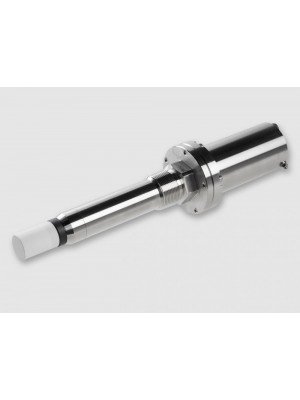
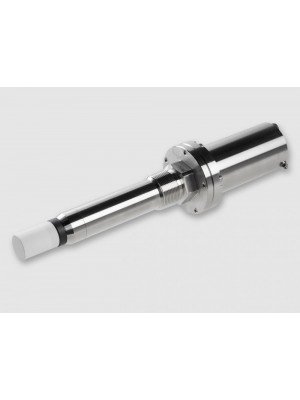
The Vaisala MGP261 measures methane, carbon dioxide and humidity directly in raw biogas. Its in-situ design avoids a separate sampling system and helps operators monitor gas quality while protecting downstream equipment.
The Vaisala MGP262 continuously measures methane slip and carbon dioxide in offgas from biomethane-upgrading processes. Its in-situ design provides direct, always-on measurement without a separate sampling system.